
Career Center Time Management: Where Your Week Actually Goes
Most career center staff spend over half their week on tasks that don't require their expertise. Resume formatting, answering the same first-visit questions, chasing down follow-up emails. The strategic work you were hired to do gets squeezed into whatever gaps remain.
That's not a motivation problem. It's a systems problem. And fixing it doesn't require new headcount or a six-figure platform. It requires looking honestly at where your hours go and redesigning the repetitive stuff.
Audit Your Week Before You Fix It
Picture this: it's Tuesday afternoon, you've spent 90 minutes reformatting resumes that all had the same margin and font issues, walked three students through identical "tell me about yourself" prep, and you still haven't started preparing for Thursday's employer panel. Your calendar says you had two hours of "advising" blocked off. What actually happened was clerical work wearing an advising costume.
Before changing anything, track your time for one full week. Not in broad categories like "student meetings" but in honest, granular detail. How many minutes went to first-pass resume reviews versus deep career exploration conversations? How much time did you spend on scheduling logistics versus actual advising?
Career centers at mid-size universities often run 3-to-5-person teams serving thousands of students. When two of those people spend 10 hours a week each on repetitive intake tasks, that's 1,000+ hours per year of professional expertise spent on work that templates, peer mentors, or basic automation could handle.
The audit almost always reveals the same pattern. The high-impact work you're best at, helping a student navigate a career pivot, coaching someone through a tough decision, building employer relationships, gets less than a third of your time.
Five Fixes That Reclaim Hours, Not Just Minutes
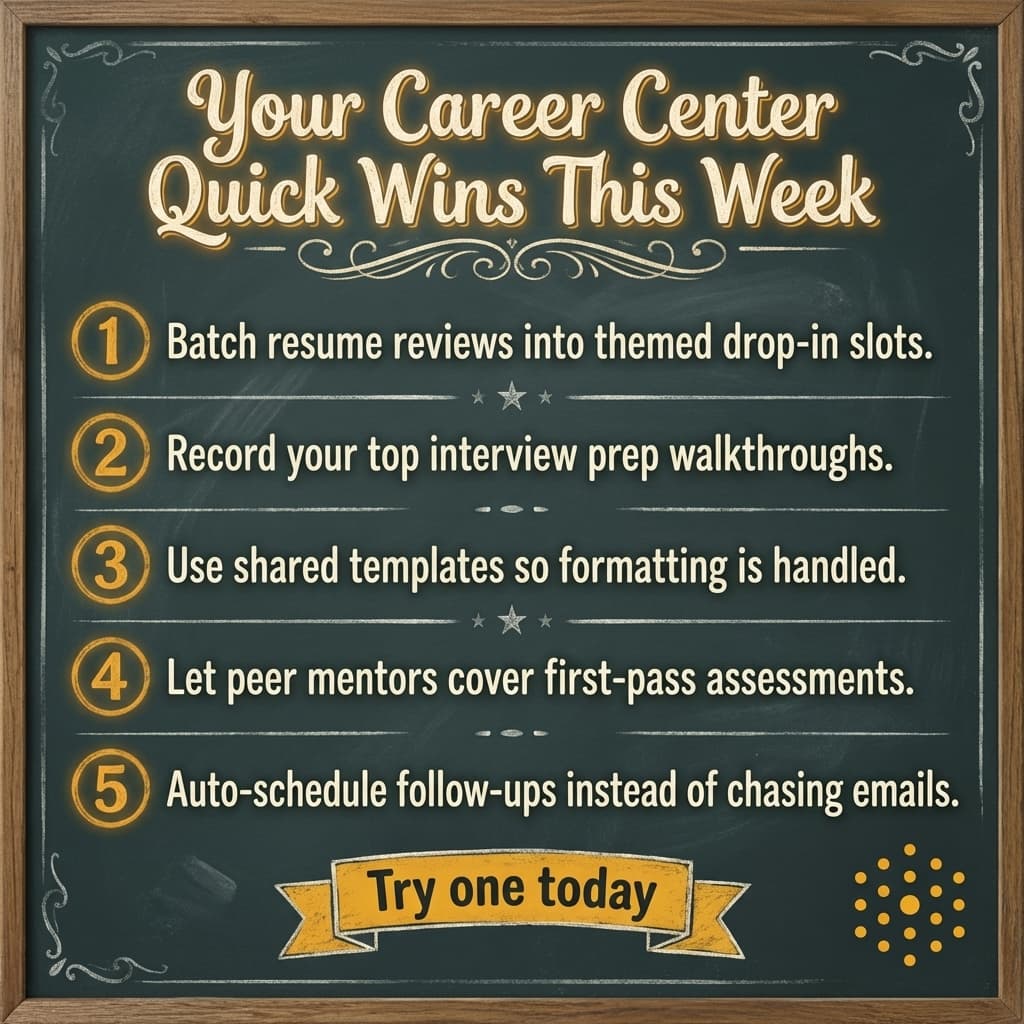
Small structural changes compound. Here's where to start.
Batch resume reviews into themed drop-in slots. Instead of scattering 15-minute resume appointments across every day, run two focused sessions per week organized by student type (first-year explorers, seniors in job search mode). You'll move faster, give more consistent feedback, and students will learn from hearing each other's questions.
Record your most-repeated advice. If you've given the same interview prep walkthrough 40 times this semester, record it once. A 10-minute video covering "tell me about yourself" structure and the STAR method handles 80% of what first-time visitors need. Students watch it before they book with you, so your live conversations start at a higher level.
Standardize formatting with shared templates. Every hour spent fixing margins and font sizes is an hour stolen from actual career guidance. Build or adopt three resume templates that work for your student population and make them the default starting point. Formatting debates disappear overnight.
Let trained peer mentors cover first-pass assessments. A well-trained junior or senior can absolutely handle initial career interest inventories, basic resume checks, and resource orientation. Many schools already do this but limit peer mentors to front-desk logistics. Push them further. They grow professionally, and your team gets breathing room.
Auto-schedule follow-ups. If you're sending manual "just checking in" emails after advising appointments, stop. Set up automated sequences triggered by appointment completion. Tools like Calendly, Handshake, or even a basic CRM workflow can handle this in minutes.
None of these require budget approval. They require a Wednesday afternoon and some willingness to change habits.
The Real Payoff Isn't Efficiency
Yes, you'll save time. But the bigger win is what happens to your work quality when you're not running on fumes. A career advisor who's had space to think before a tough conversation shows up differently than one who just speed-reviewed twelve resumes.
Students notice. They can tell when you're fully present versus when you're mentally triaging your inbox. The conversations that change someone's trajectory, where a student finally articulates what they actually want instead of what they think they should want, those only happen when you have the cognitive margin to listen deeply and respond thoughtfully.
Why would you spend your best professional skills on tasks a template can solve?
This week, try one thing. Just one. Track your time Monday through Friday using whatever method works, a spreadsheet, a notes app, tally marks on a sticky note. Write down what you actually did in 30-minute blocks. By Friday, you'll see exactly where your hours are leaking. That's your starting point for building a week that reflects the work you're actually great at.
Create campaigns like this in minutes
Career Engage Studio helps career centers create student engagement content with AI.
Learn More