How to Actually Get Students to Engage
It's not about one perfect message. It's about showing up consistently.
Career centers do work that changes real outcomes for students. You help people make sense of their options, build confidence, and take steps that shape what comes next. That kind of work matters.
But reaching students has gotten harder.
Not because they don't care.
And not because the programs aren't useful.
Most students care deeply about where they're headed. Career development just isn't always front of mind until it suddenly needs to be. Until then, they're moving between classes, jobs, family responsibilities, and a constant stream of digital input.
If something isn't easy to notice or quick to understand, it often slips by. Even when it would genuinely help.
The Weight of Low Engagement
Over the years, we've seen career teams put in real effort. Running workshops. Opening advising hours. Building resources. Hosting fairs. And still wondering how many students actually saw what was offered.
Low engagement shows up in attendance numbers.
It shows up in reports.
It shows up in questions about impact.
Sometimes it shows up in budget conversations.
That weight tends to sit quietly with career teams. But it doesn't have to.
The Reality Career Centers Are Working Within
Most career centers were never set up to function like marketing teams. But more and more, that's what the work requires.
Email. LMS. Handshake. Social platforms.
Each channel has its own norms, timing, and expectations. All of it usually managed by small teams with limited time.
So promotion becomes manual. Messages get reused. Design varies from post to post. Creating something new can feel like more work than running the program itself.
This isn't about effort or commitment. It's about how students find information now, and how difficult it can be to meet them there with the tools available.
What Actually Works
Building a company taught us something we didn't fully appreciate at the start: even when you believe in what you're offering, it doesn't land immediately.
Attention builds slowly. It takes repetition. It takes presence across multiple places.
What made the difference for us wasn't a single campaign. It was continuing to show up. Improving the message. Using more than one channel. Staying consistent even when results were uneven.
We see the same pattern with career centers.
Engagement grows when students encounter the same opportunity clearly, more than once, in spaces they already spend time. Not louder messaging. Just steady, understandable communication.
The career centers that see better engagement aren't necessarily the ones with the biggest budgets or the fanciest graphics. They're the ones that show up consistently.
Why Multi-Channel Matters
Different students live in different digital spaces. Some check email religiously. Others haven't opened their school email in weeks but scroll Instagram every day. Some are active on LinkedIn because they're already job hunting. Others primarily see what's posted in their LMS.
If you only use one channel, you're only reaching one slice of your student population. And even for the students who do use that channel, you're competing with everything else in their feed.
Email works for detailed information and students who are actively planning.
Instagram catches students during casual scrolling—quick, visual, low commitment.
Handshake reaches students when they're already in career mode.
LMS announcements meet students where they're already going for class.
LinkedIn connects with students who are building their professional presence.
When a student sees your career fair mentioned in an email, then again on Handshake, then in a quick Instagram story, something clicks. It goes from background noise to "oh, this is actually happening and maybe I should check it out."
How Engagement Compounds
When career centers commit to consistent, multi-channel communication, engagement starts to build. Not overnight. But steadily.
Students start to recognize the career center as a presence in their digital life. They begin to associate it with useful, relevant information. When they do need help—resume review before an interview, questions about an internship—they know where to go.
And when engagement improves, something shifts. Confidence in the effort. Confidence in the impact. Confidence in the role career centers play on campus.
Each touchpoint makes the next one more effective.
What This Looks Like in Practice
If you're promoting an event or resource, aim for:
- 1.
An initial announcement when registration opens or the resource goes live
- 2.
A reminder a few days before (for events) or a follow-up highlight (for resources)
- 3.
A final nudge the day before or day of
- 4.
Coverage across at least 2-3 channels—not the same message copy-pasted, but adapted for how each platform works
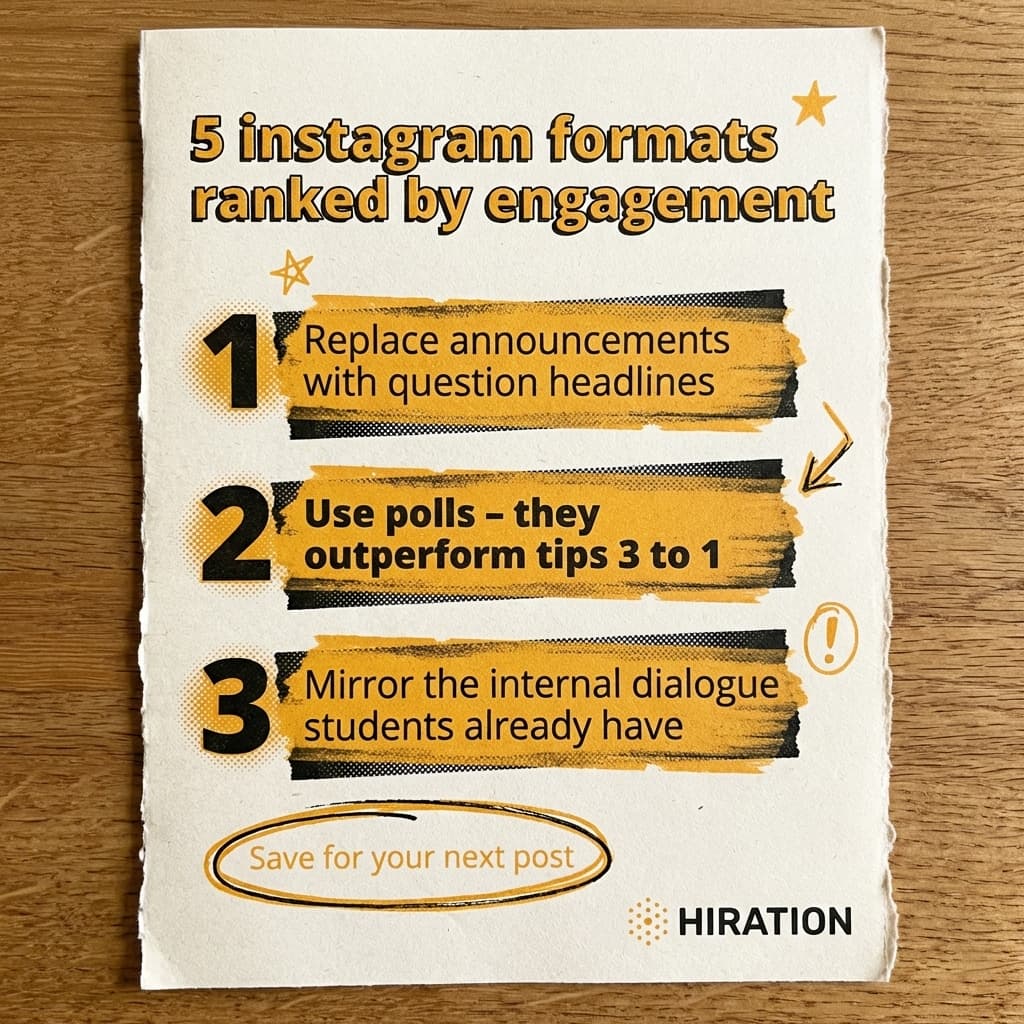
And beyond individual promotions, think about maintaining a steady presence. Regular career tips. Quick polls. Content that keeps students engaged between the big events.
That kind of consistency shouldn't be exhausting to maintain.
The Bottom Line
Students want support. They just don't always recognize it right away.
Student engagement isn't about finding the magic subject line or the perfect posting time. Those things help at the margins, but they're not what moves the needle.
What moves the needle is showing up. Consistently. Across multiple channels. With clear, student-friendly messaging that respects their time and attention.
Keep reaching out. Keep showing up. Engagement will follow.
Need help making this easier?
Campaign Studio helps career centers show up clearly and consistently across email, LMS, Handshake, and social channels, without the manual work of adapting content for each platform.
Try it free