

Alumni··7 min read
Alumni Marketing Plan Template for 2-3 Person Teams
Alumni marketing plan template for 2-3 person advancement teams. Two channels, five campaign types, and metrics that actually predict giving.
Read articleStudent engagement strategies, admissions marketing playbooks, and operational ideas for higher education professionals.
Alumni marketing plan template for 2-3 person advancement teams. Two channels, five campaign types, and metrics that actually predict giving.
Read article
A week-by-week June email sequence to prevent summer melt, targeting the three reasons deposited students ghost: logistics, finances, and belonging.
Higher ed teams adopt AI tools but lose hours to copy-paste logistics between platforms. Here's why point solutions fail and workflows win.
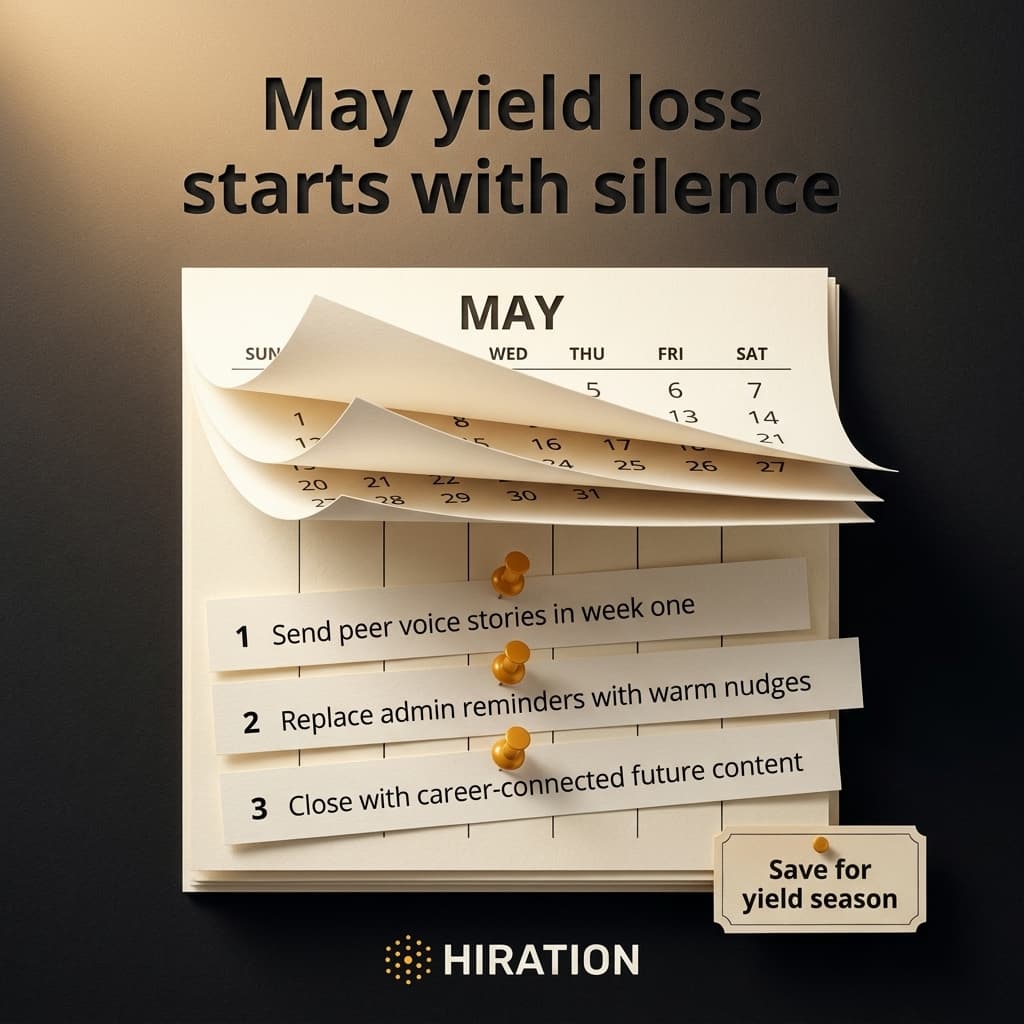
A week-by-week May content plan for deposited students that prevents summer melt. Peer stories, warm nudges, career content, and orientation momentum.

Small student success teams can't out-market admissions. But targeted retention campaigns during critical weeks drive real results. Here's how to do it.
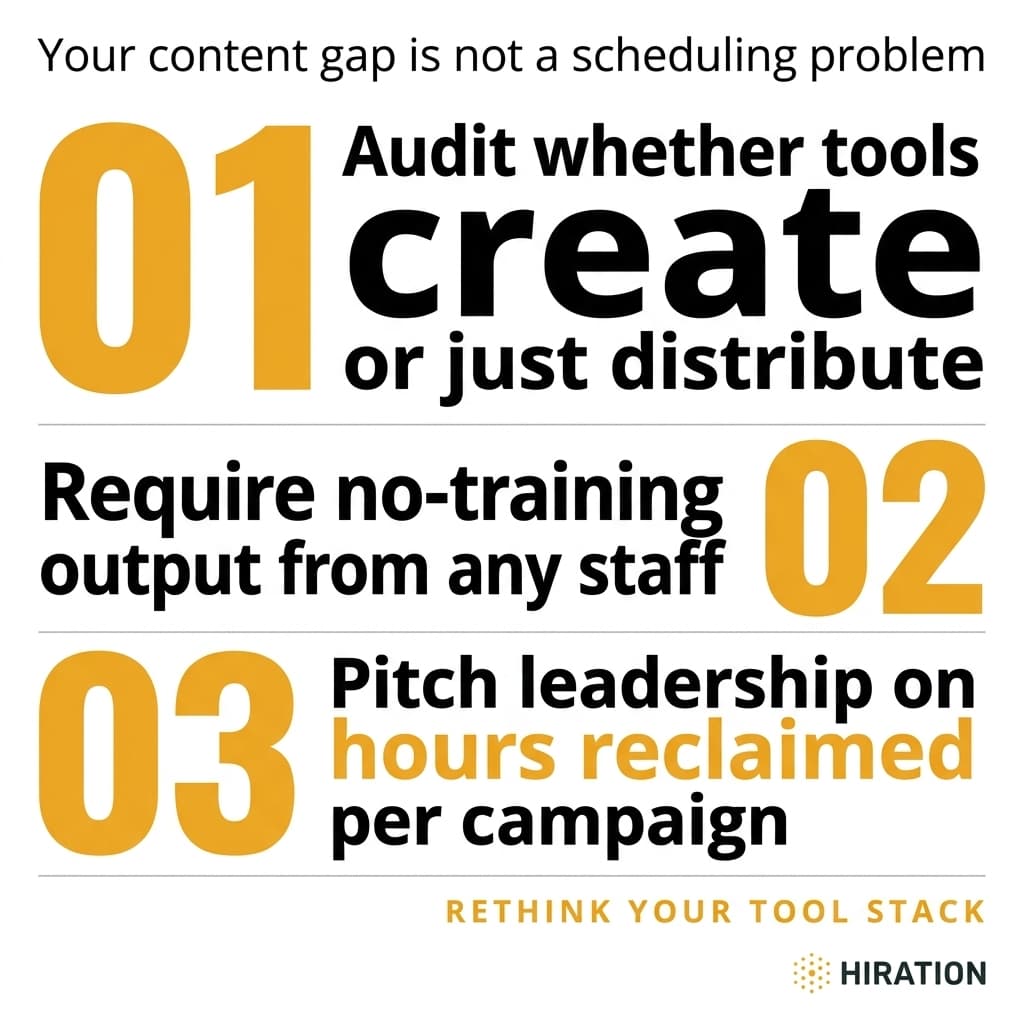
Small career center teams waste hours producing content across channels. Use these 5 evaluation questions to find tools that solve the real bottleneck.
AI content sounds generic because it lacks institutional context. A step-by-step approach for higher ed teams to build voice, tone, and brand into every AI prompt.
A 4-step outreach sequence for at-risk students that prevents silent withdrawals. Practical steps for student success teams, even with limited staff.
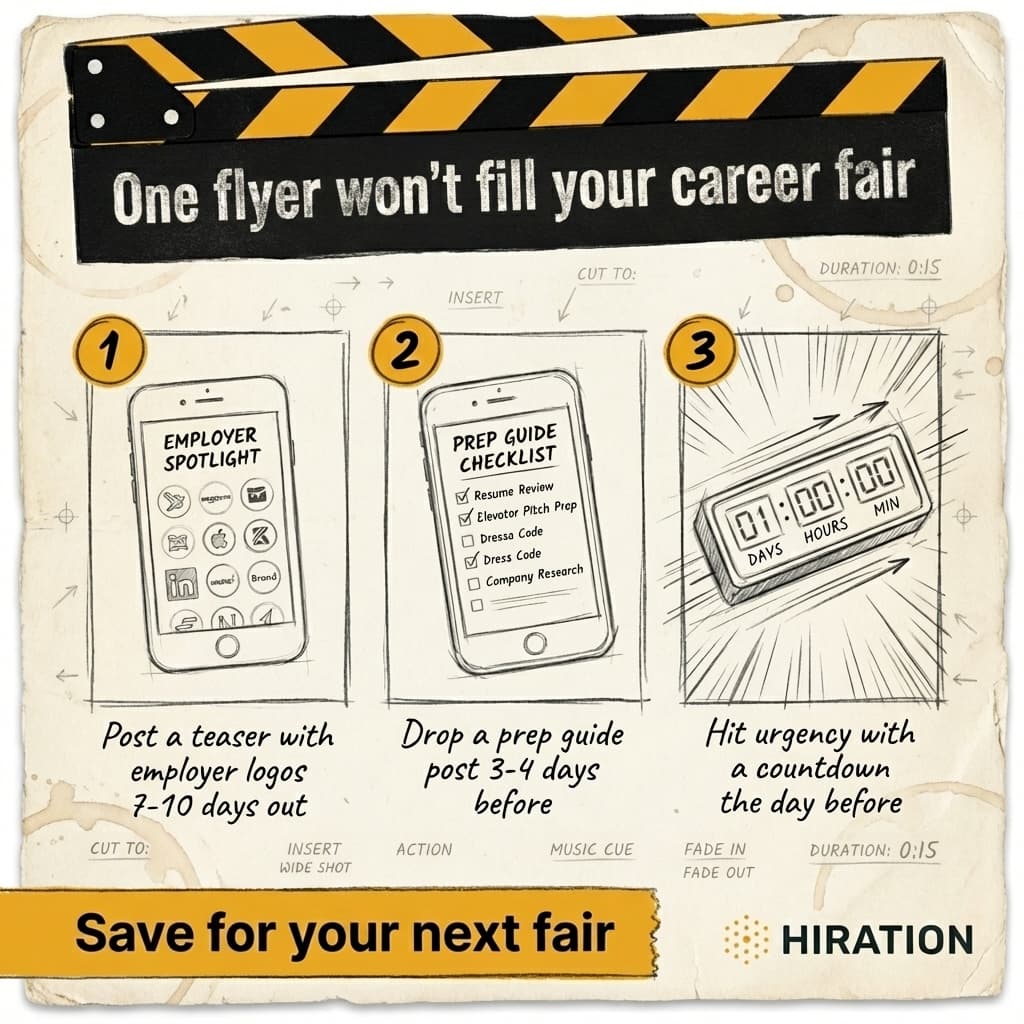
A 3-post Instagram sequence that fills career fairs: employer logos, prep guides, and social proof, timed to how students actually make decisions.
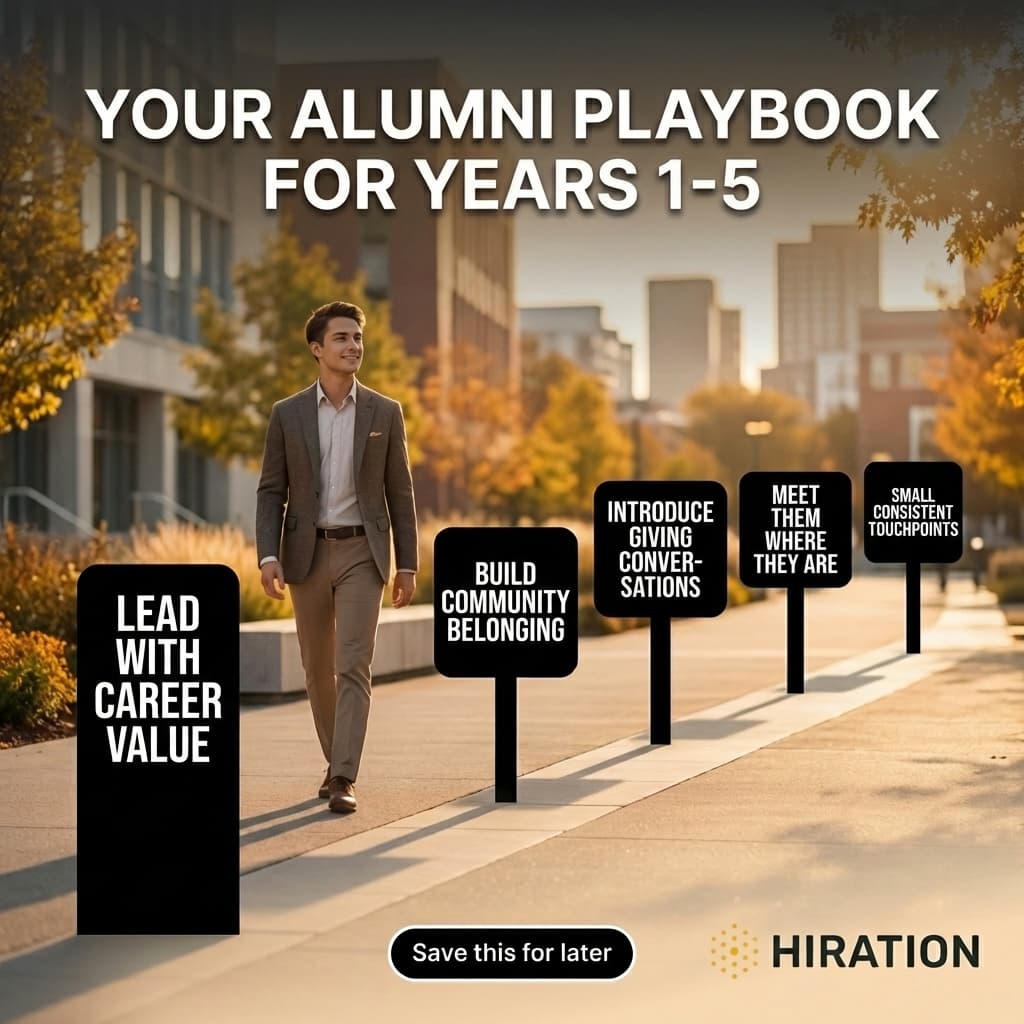
Stop sending donation asks to recent graduates. A 5-year engagement progression from career value to community to giving builds young alumni loyalty that lasts.
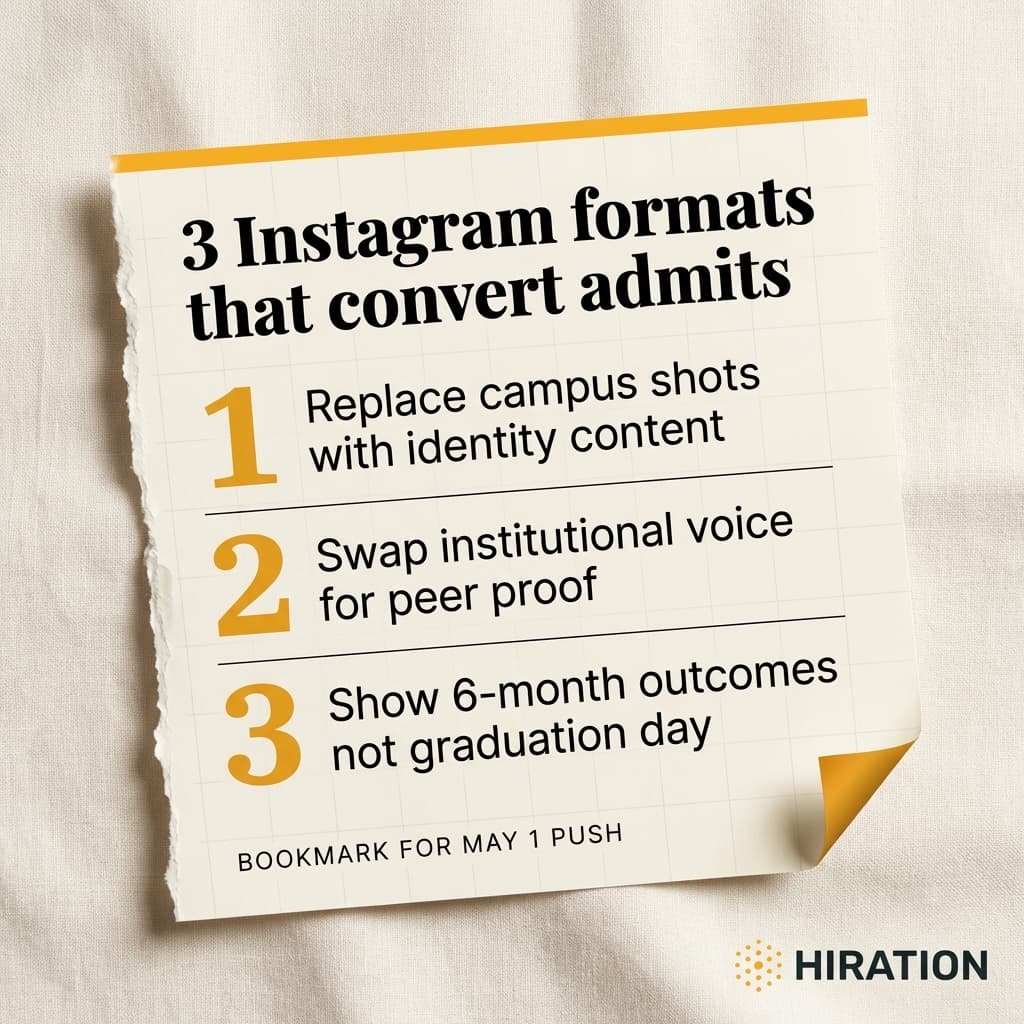
Admitted students ask 3 questions before depositing. Here's a proven Instagram content framework built around identity, peer proof, and future-self content that drives yield.
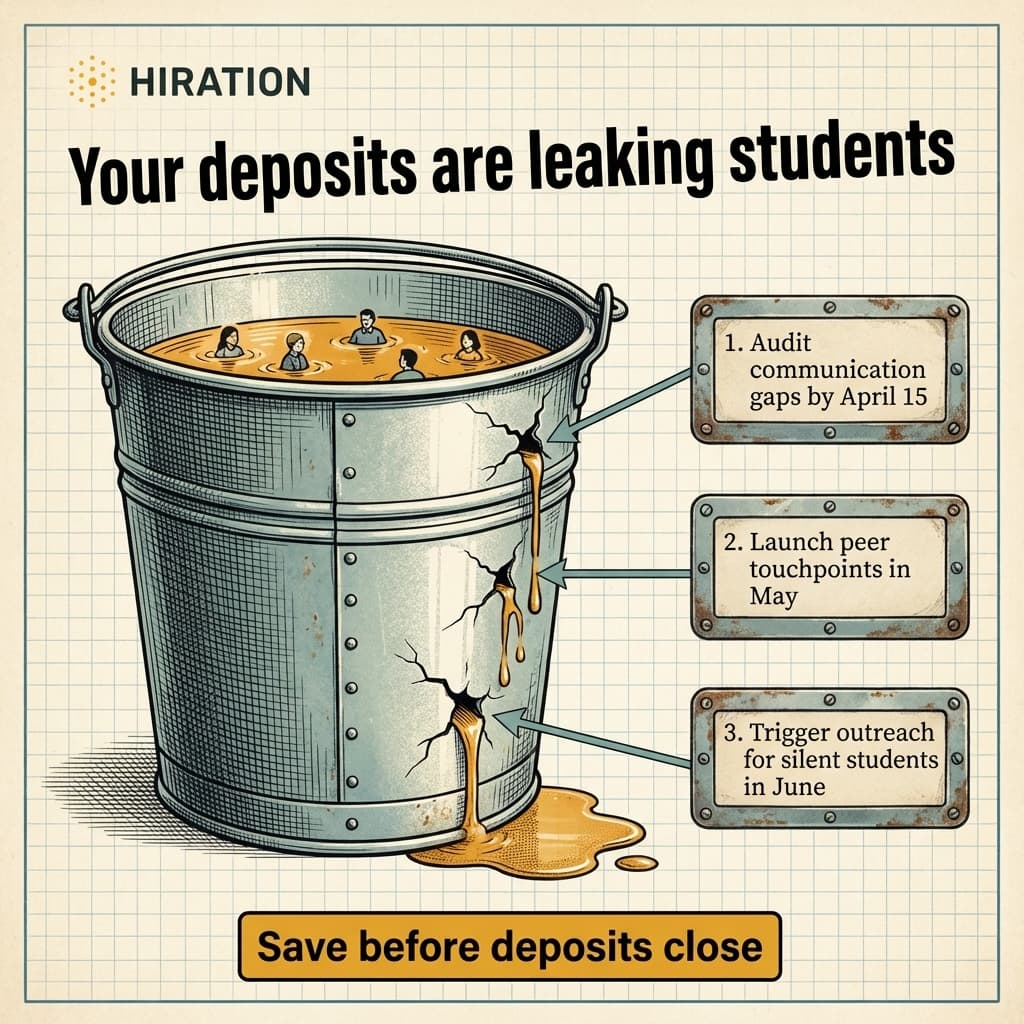
A month-by-month summer melt prevention checklist for admissions teams. Segment high-risk students, sequence outreach from April to June, and track what works.
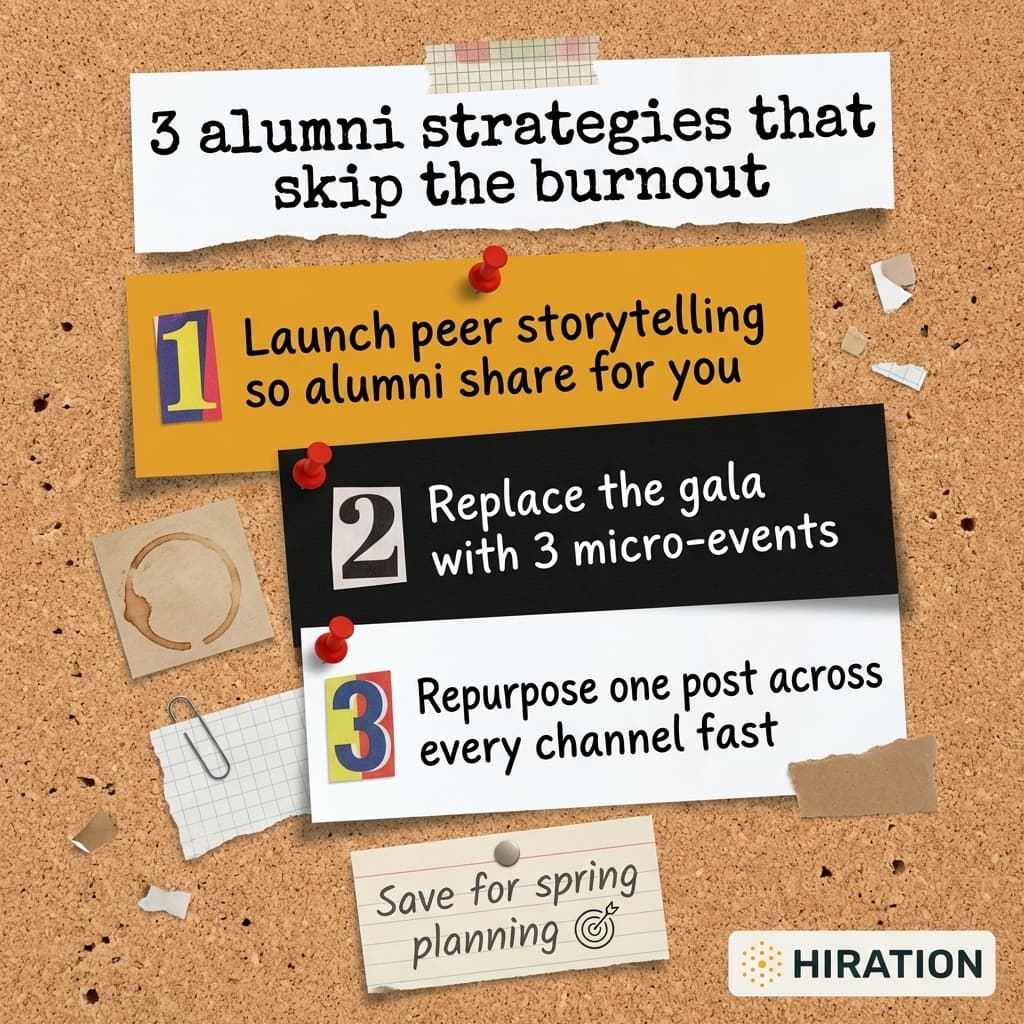
Small advancement teams of 1-3 people can run high-impact alumni campaigns using peer-to-peer strategies, micro-events, and repeatable systems. Here's how.
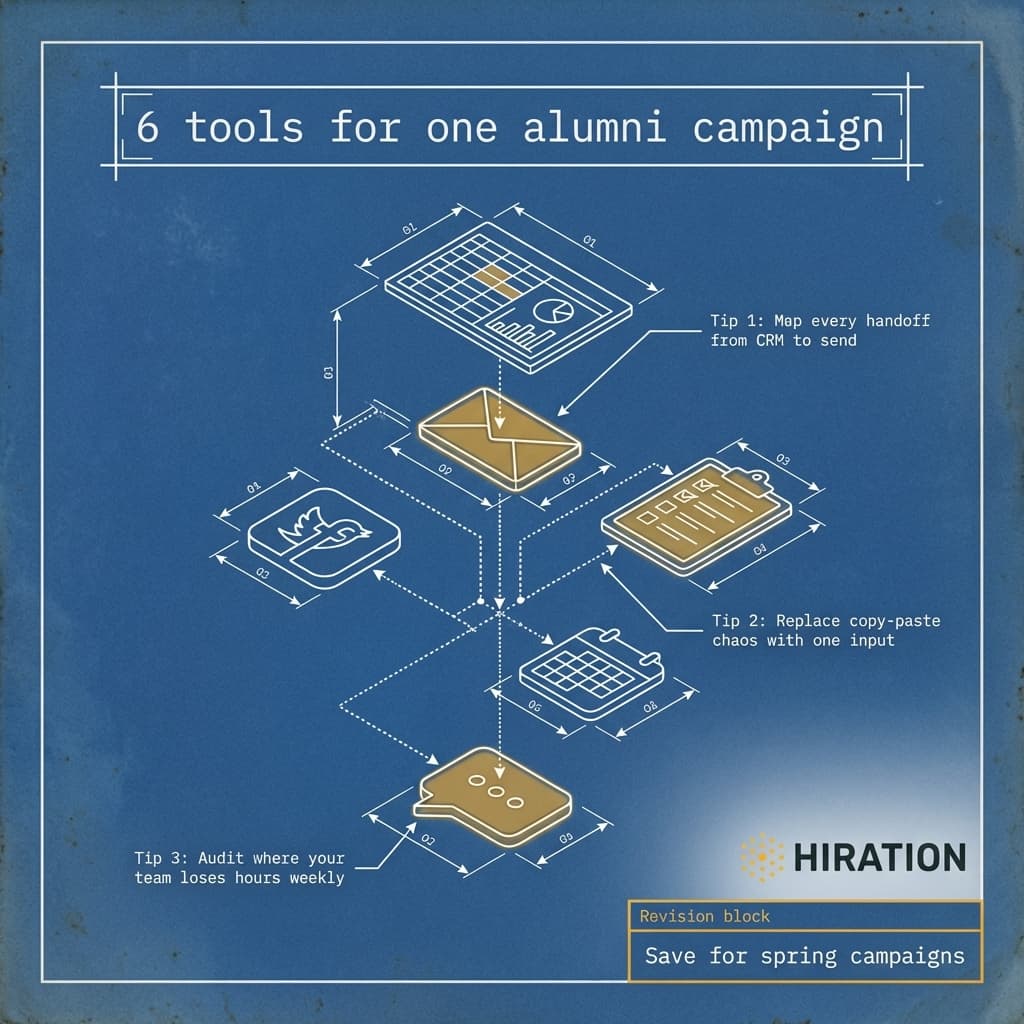
Alumni campaign workflows break down between CRM and send. Map your handoffs, eliminate manual channel adaptation, and collapse the content middle layer.
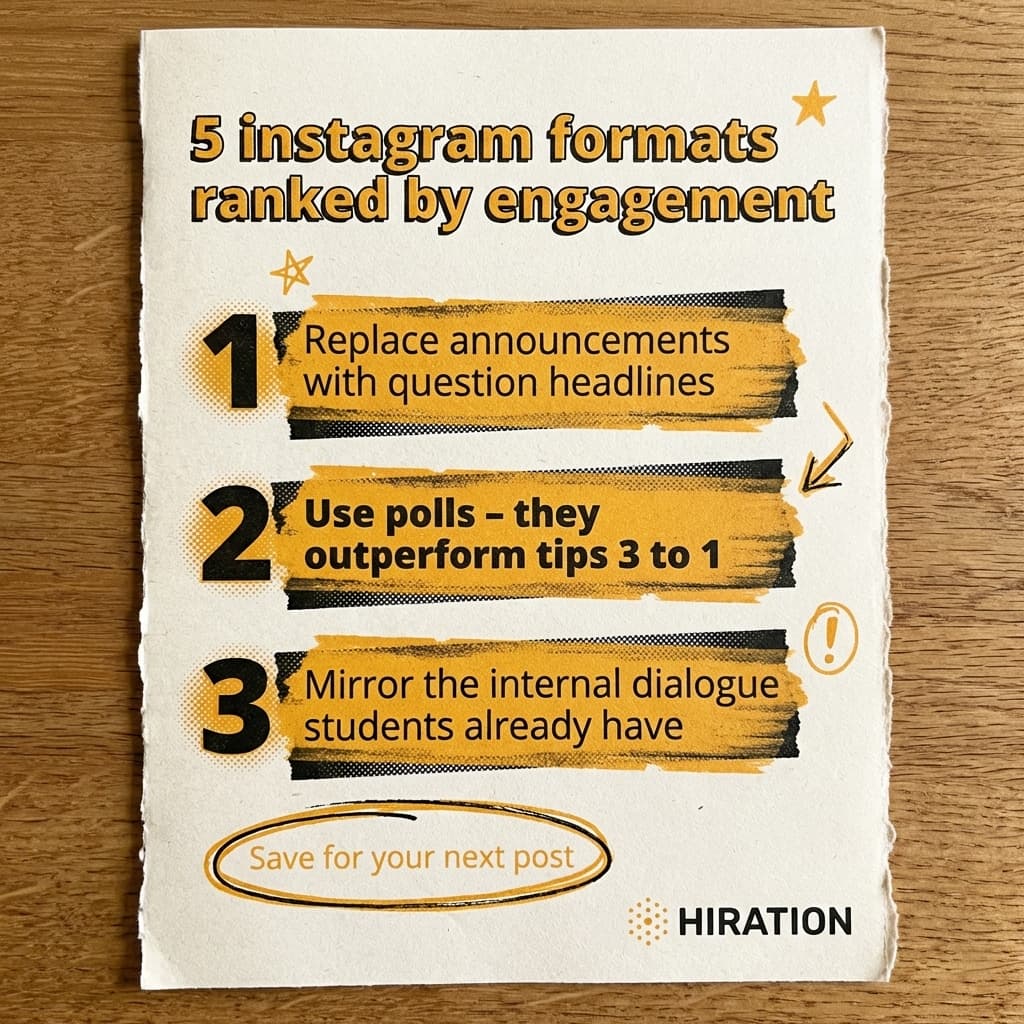
Polls outperform static tip posts 3-to-1 on Instagram. Career centers that swap announcement graphics for question-first formats see dramatically more student engagement.
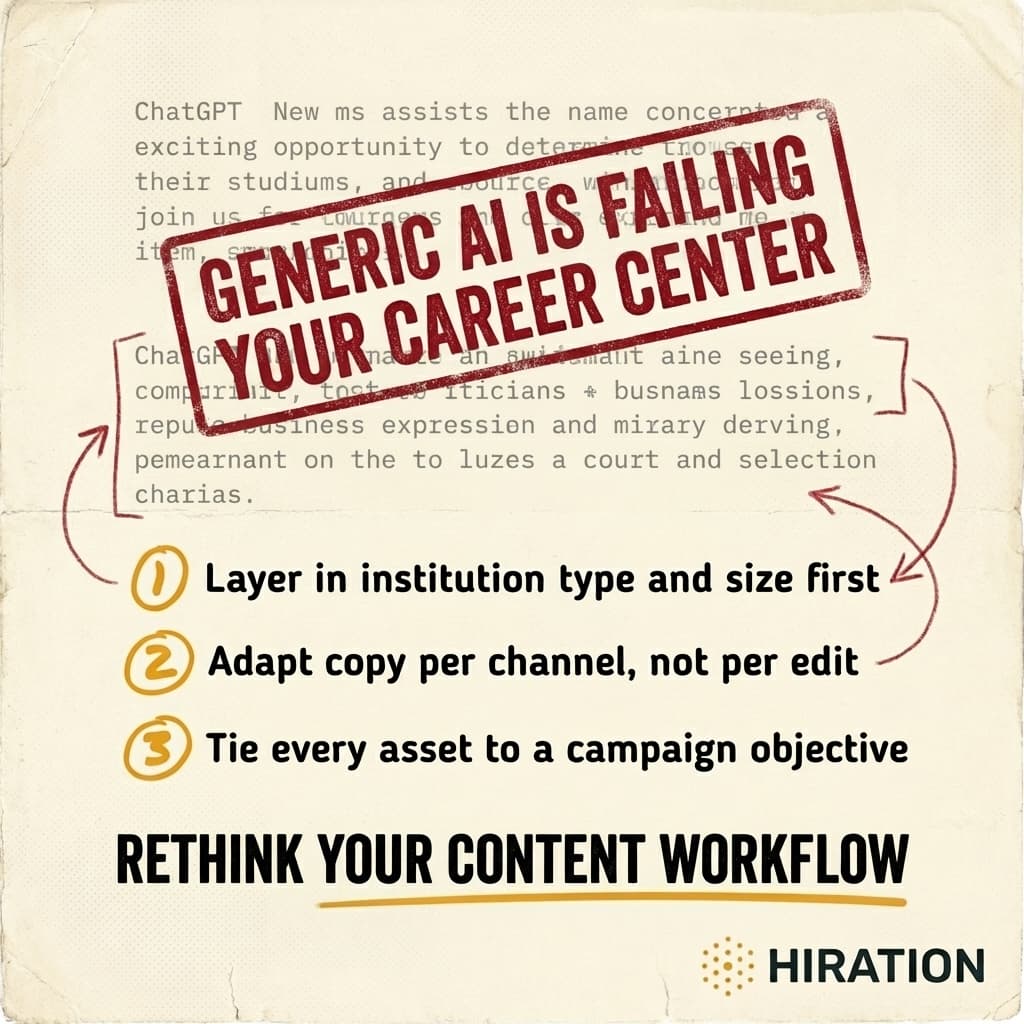
ChatGPT gives career centers generic content because it lacks institutional context. Here's a step-by-step fix to get usable copy without endless editing.
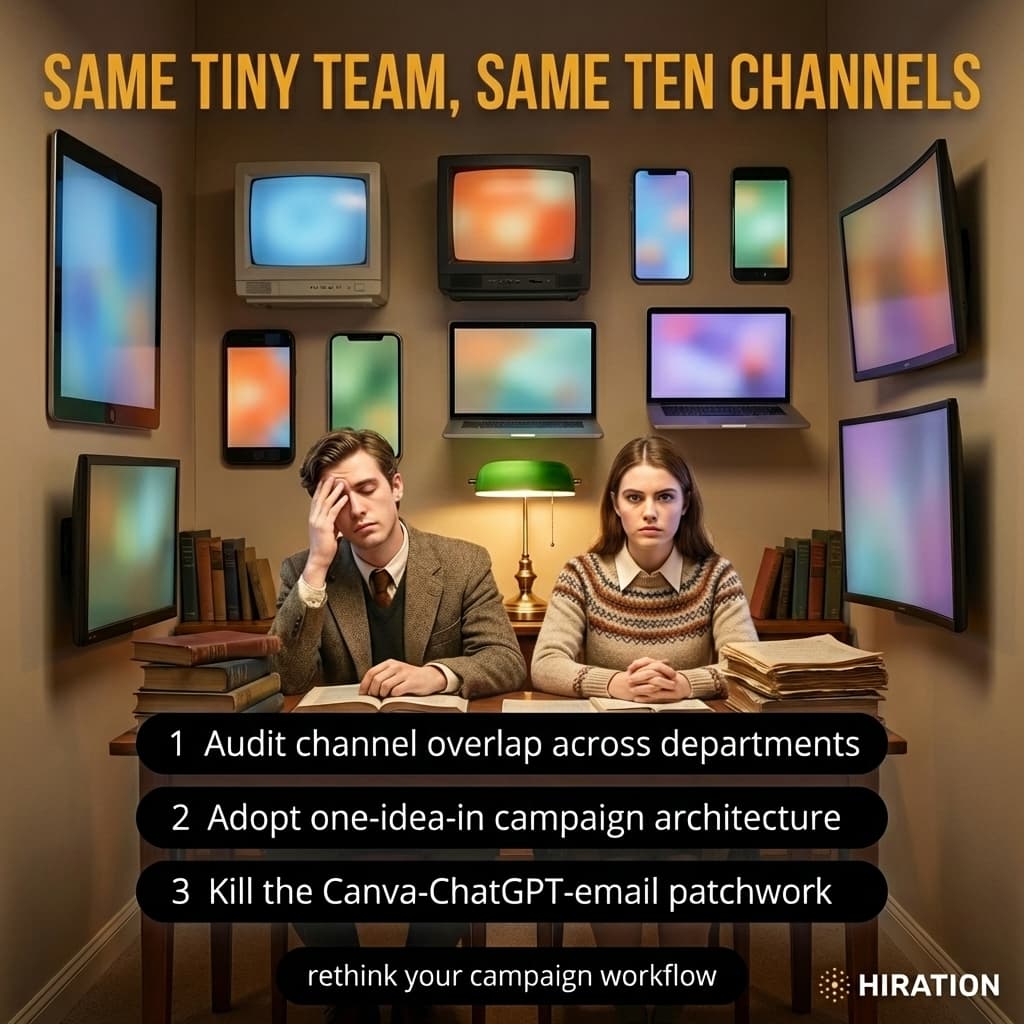
Alumni relations teams without marketing staff can run multi-channel campaigns faster by adopting one-idea-in architecture instead of stitching together free tools.
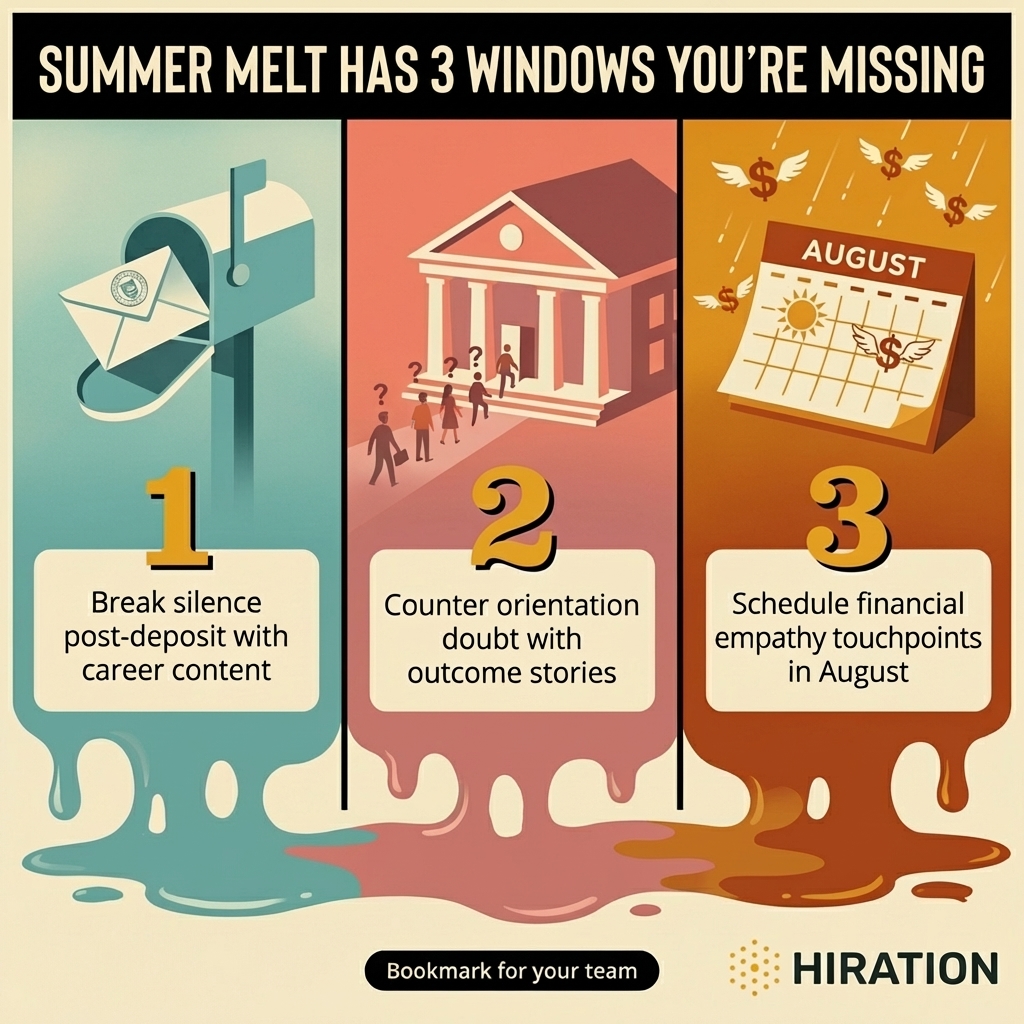
Summer melt peaks across 3 risk windows, not one. Here's a framework for timing career-connected outreach from deposit day through the first week of classes.
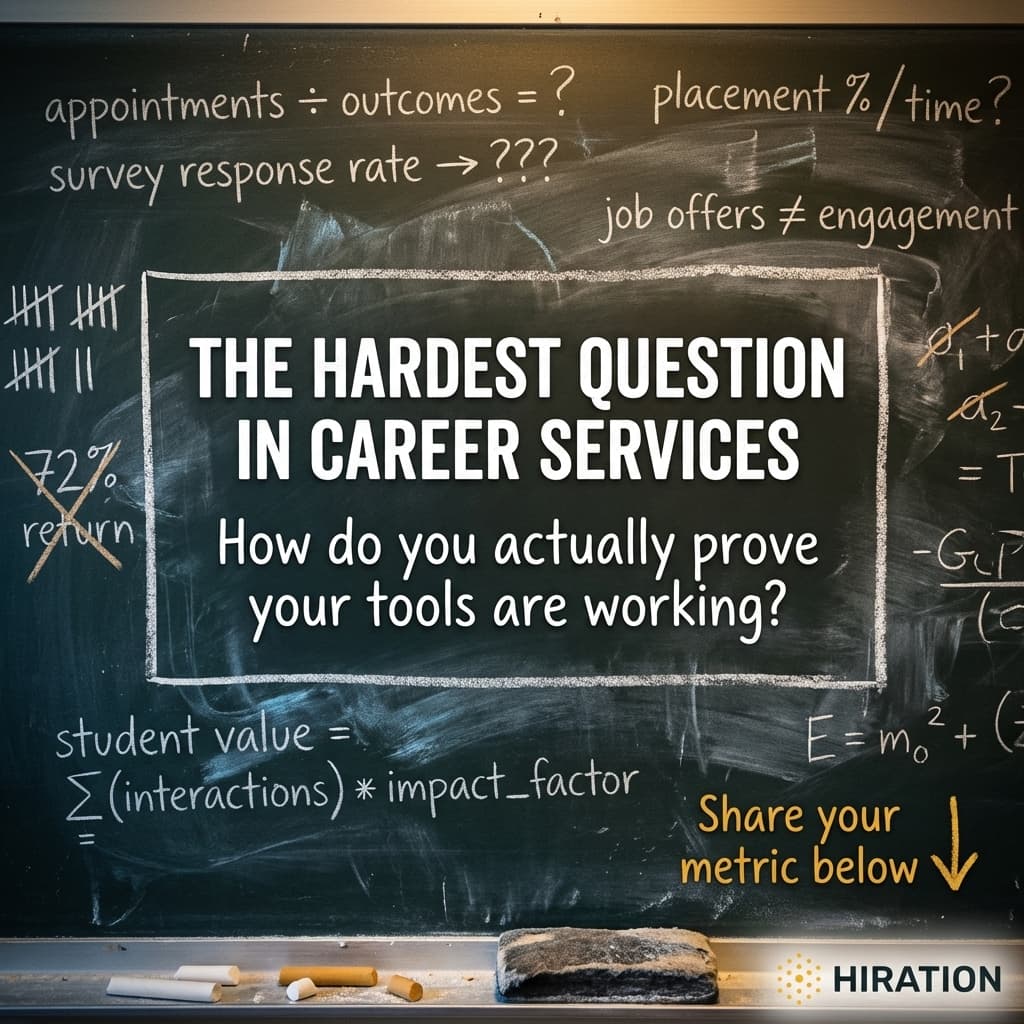
Career centers struggle to measure AI tool impact beyond login counts. Here's how to build trajectory metrics that actually convince provosts and VPs.

Career engagement data flags at-risk students before GPA drops. Here's how student success teams can integrate career platform signals into early alert systems.
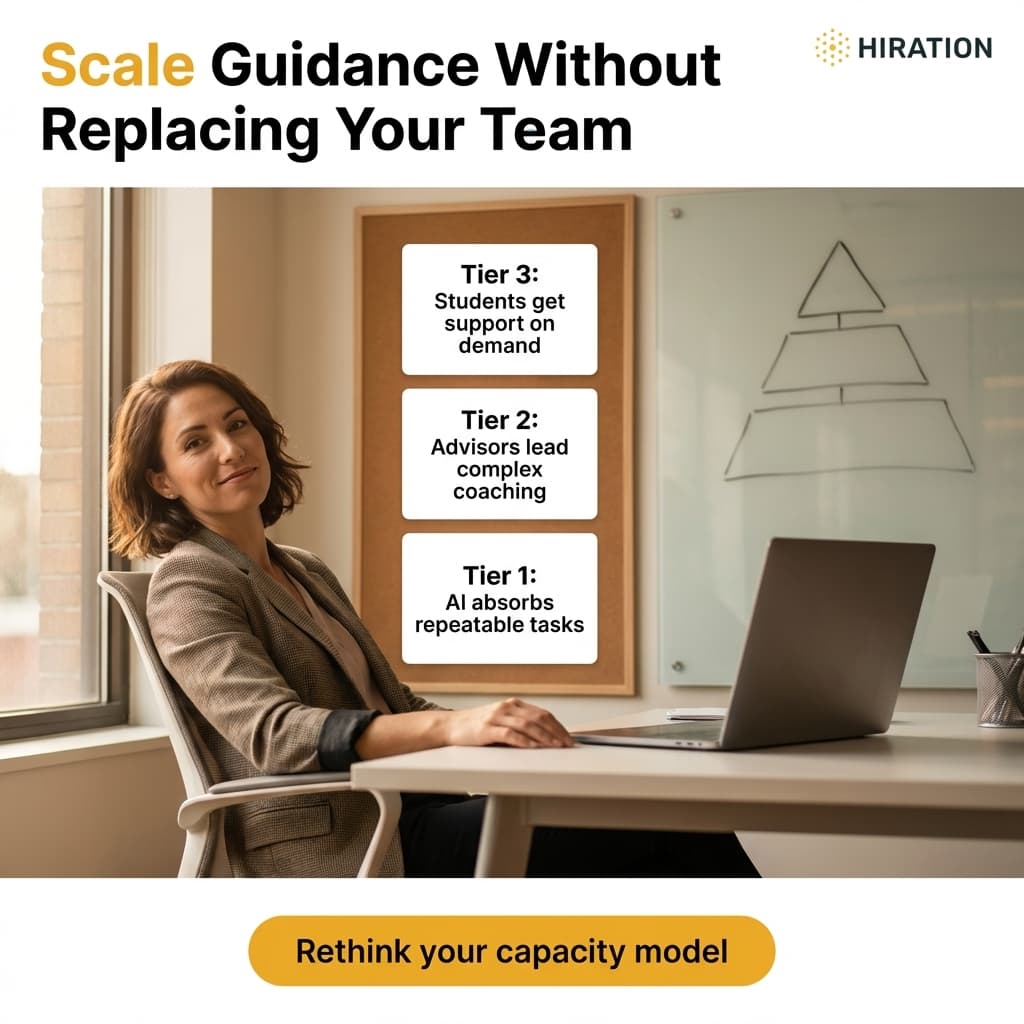
A 3-tier model for using AI in career centers: let AI handle resume reviews and interview prep so advisors focus on complex coaching that changes outcomes.
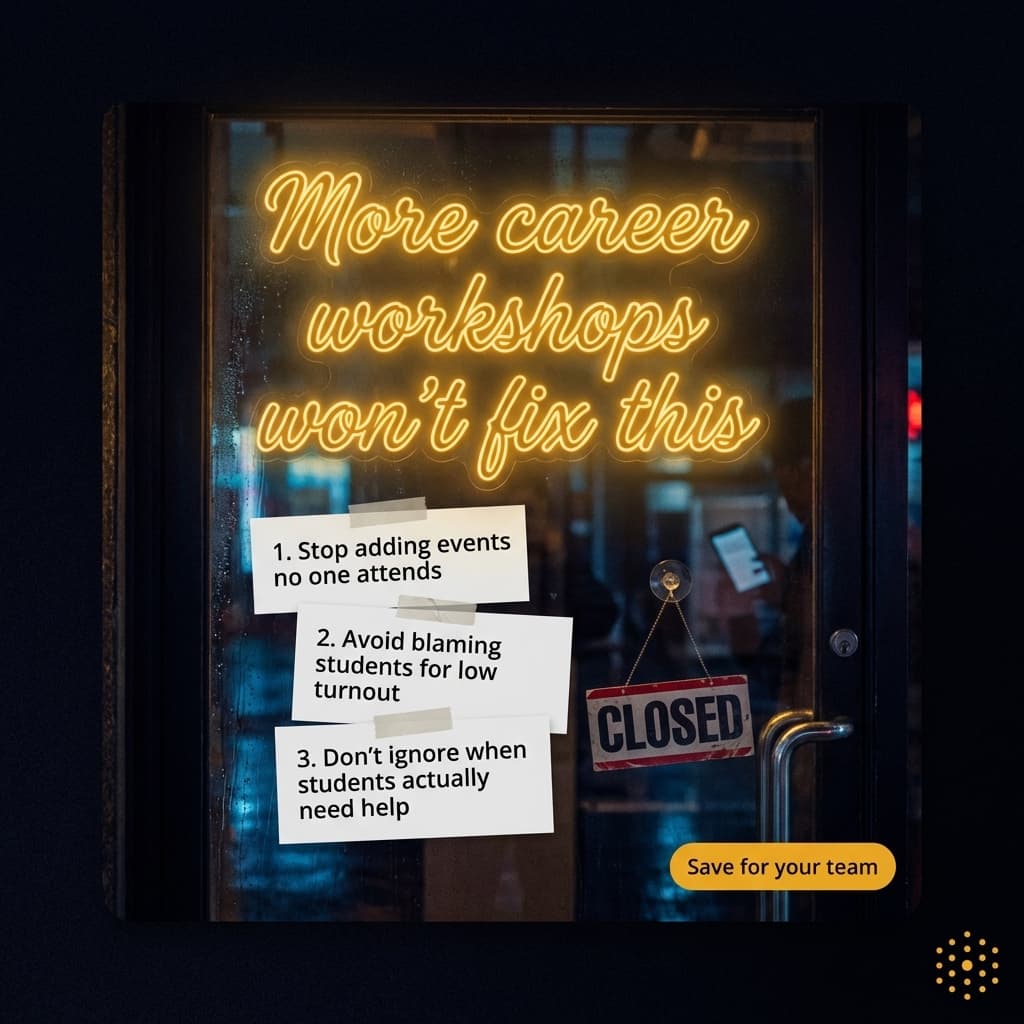
Low workshop attendance isn't a student motivation problem. Career centers seeing better outcomes are shifting from more events to always-on, async resources.
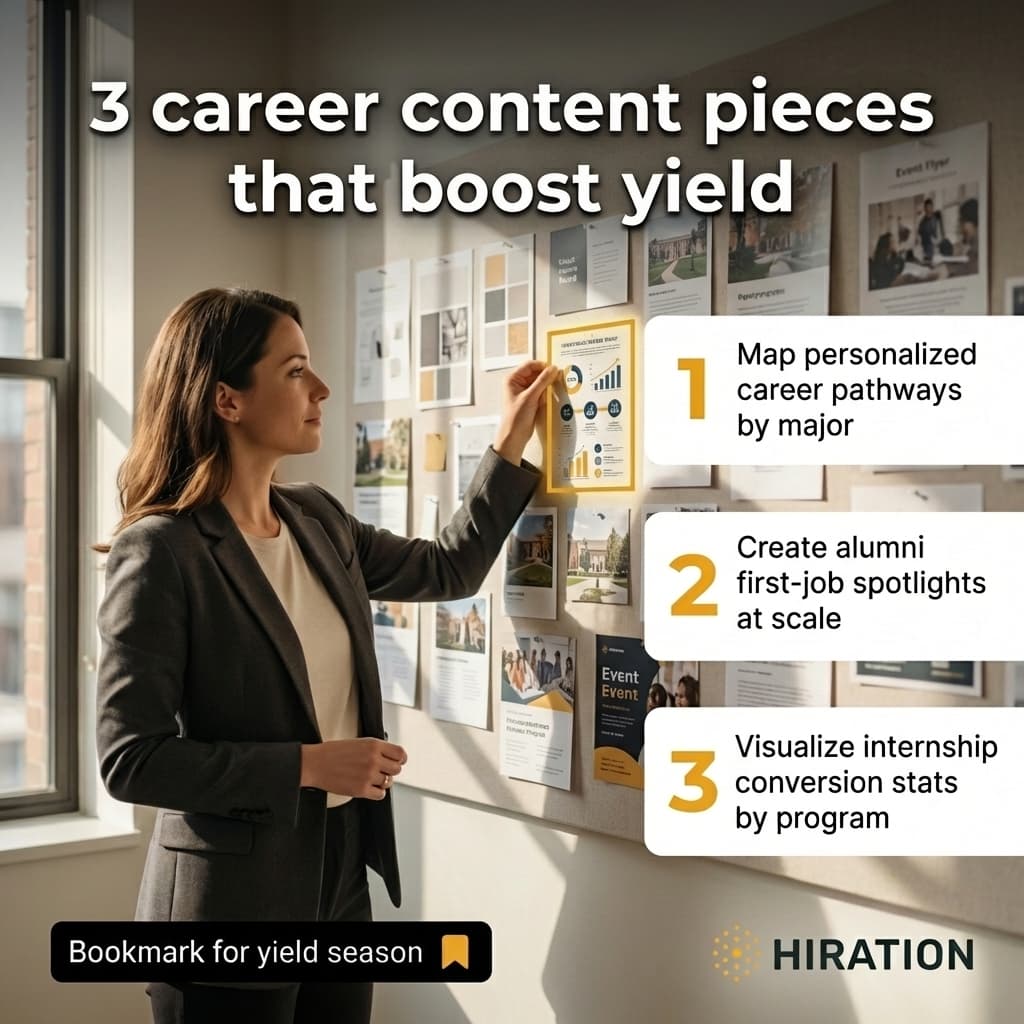
Boost admitted student yield with career outcomes content. Three proven content pieces admissions teams can build fast using existing career services data.
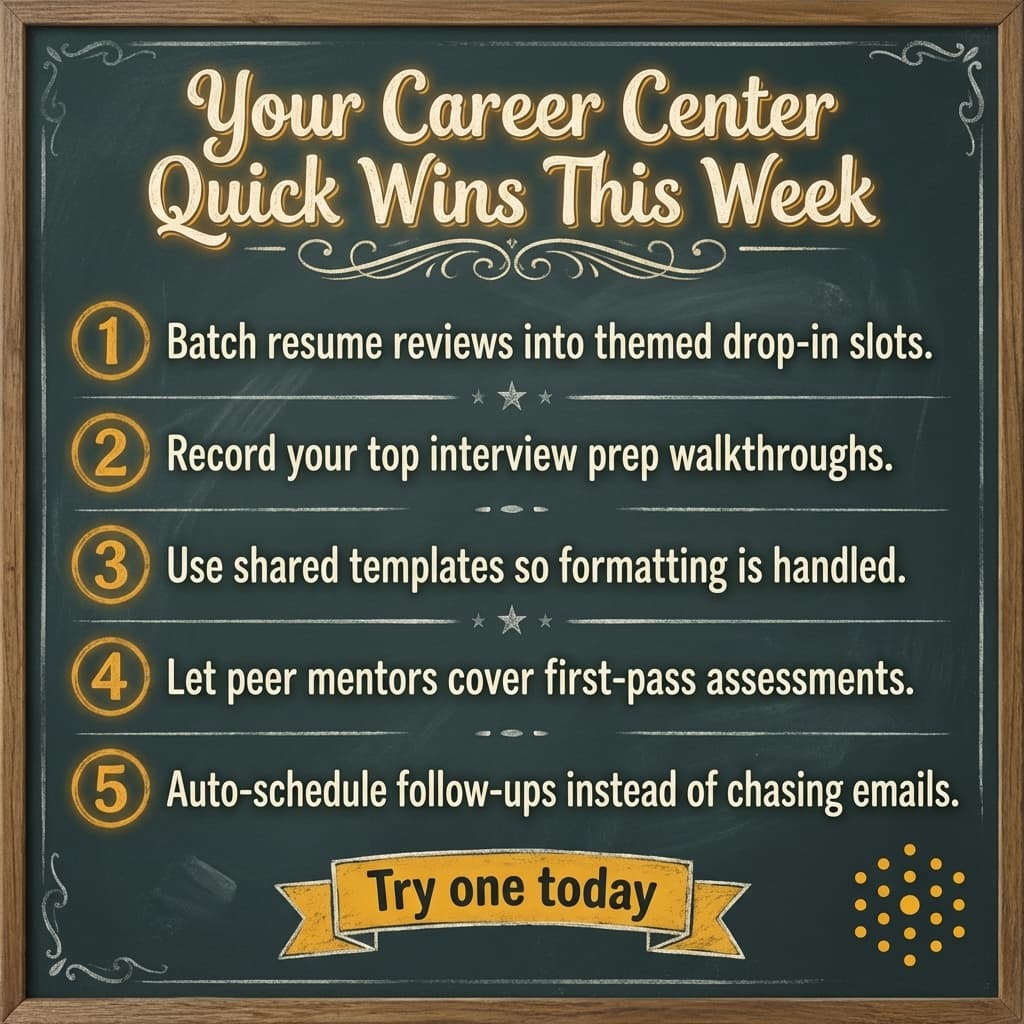
Career center advisors spend 60% of their week on low-skill tasks. Here are 5 tactical shifts to reclaim hours for the advising work that actually moves outcomes.
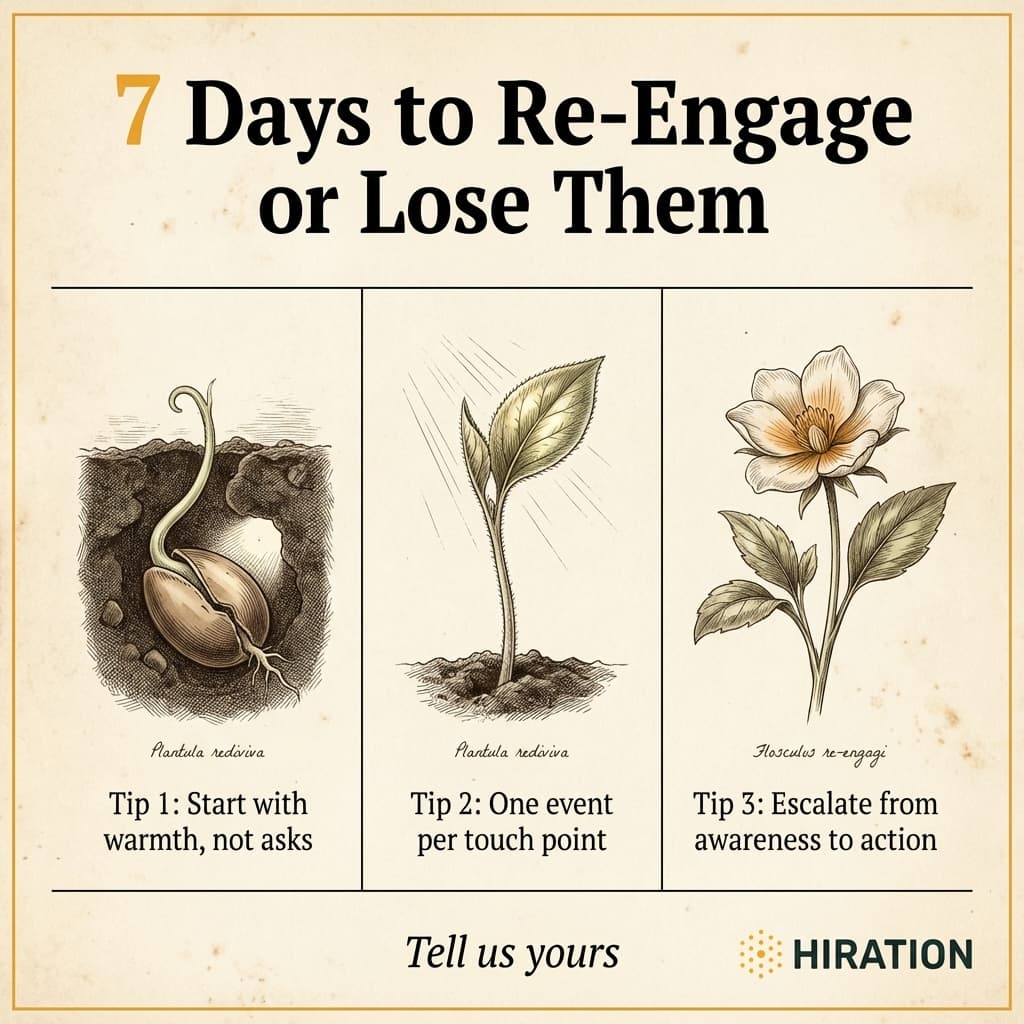
A 7-day post-spring-break outreach sequence that moves students from awareness to action. Three touches, three phases, built for small career center teams.
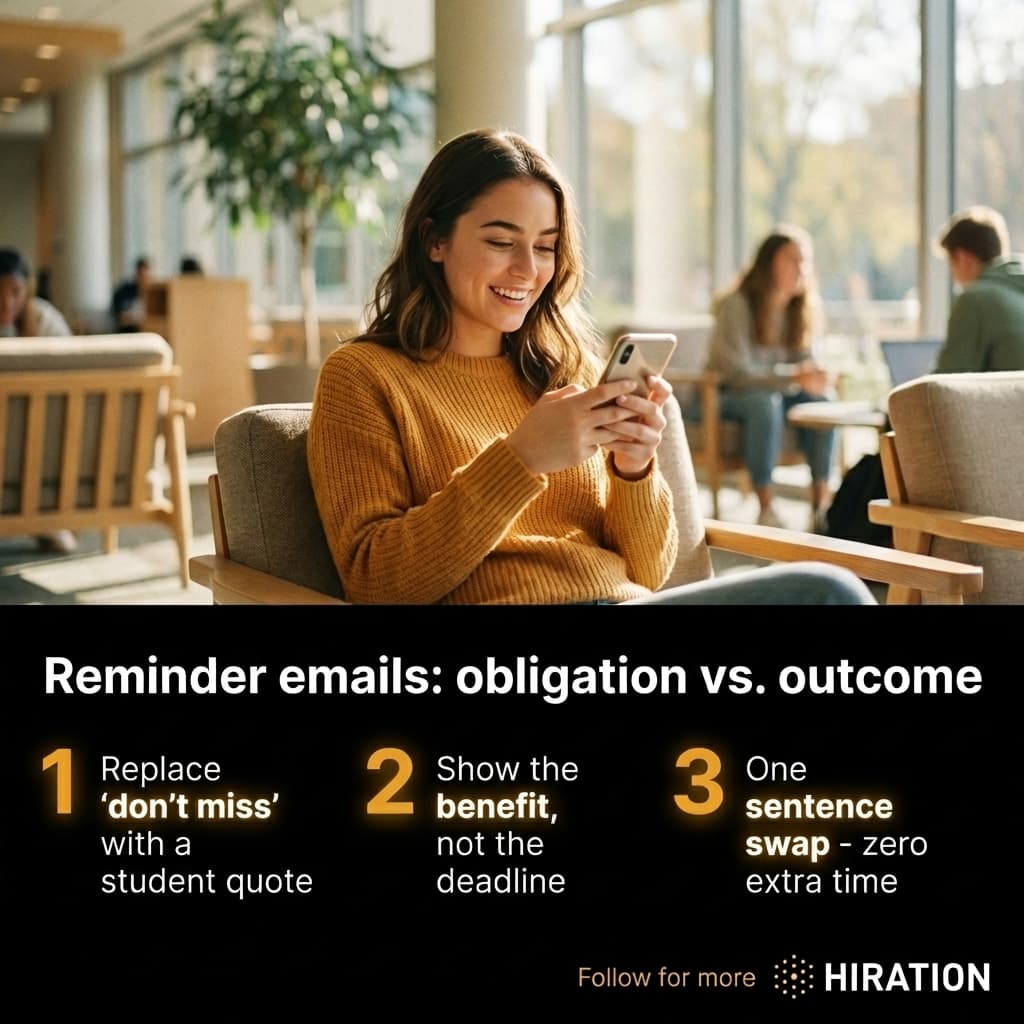
Stop writing "don't miss" event reminders. One outcome-framing sentence about a real student result boosts career center event turnout with zero extra effort.