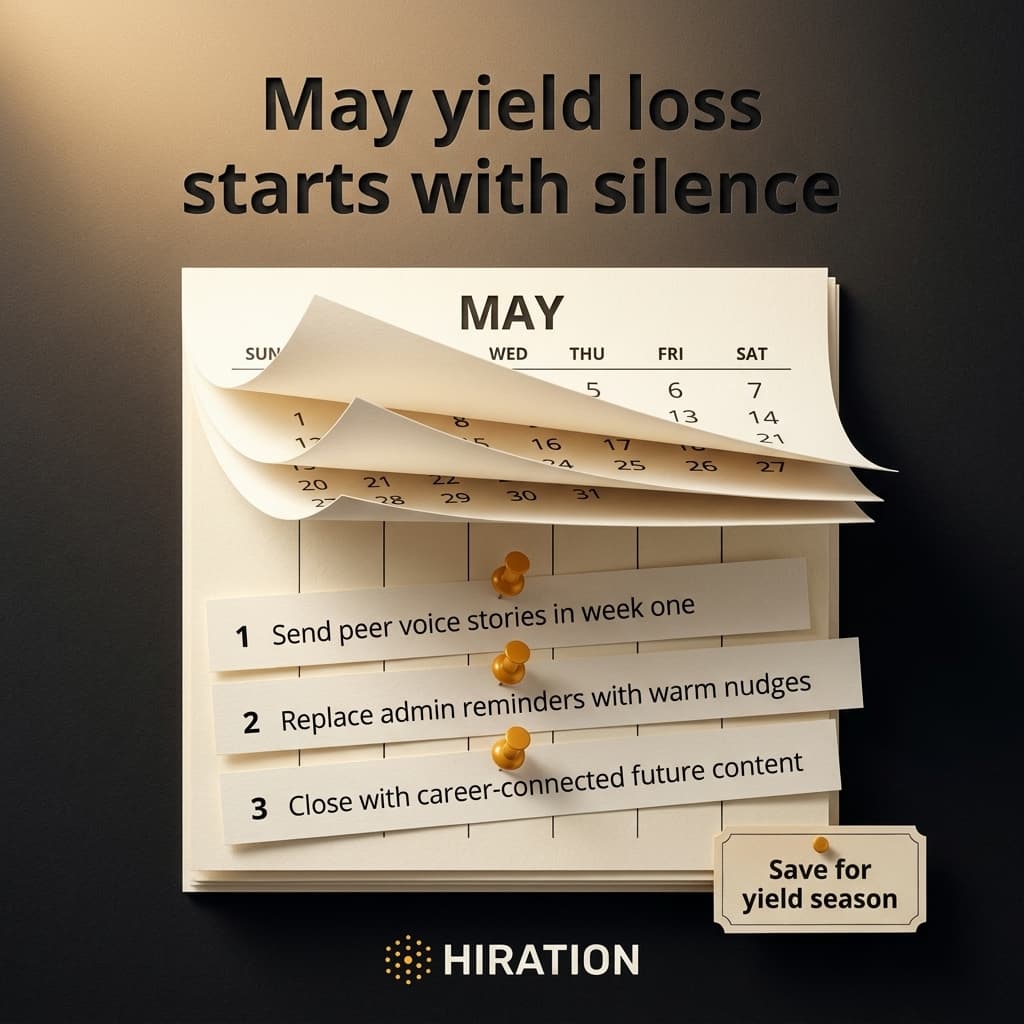
Summer Melt Prevention: A Month-by-Month Checklist for Admissions Teams
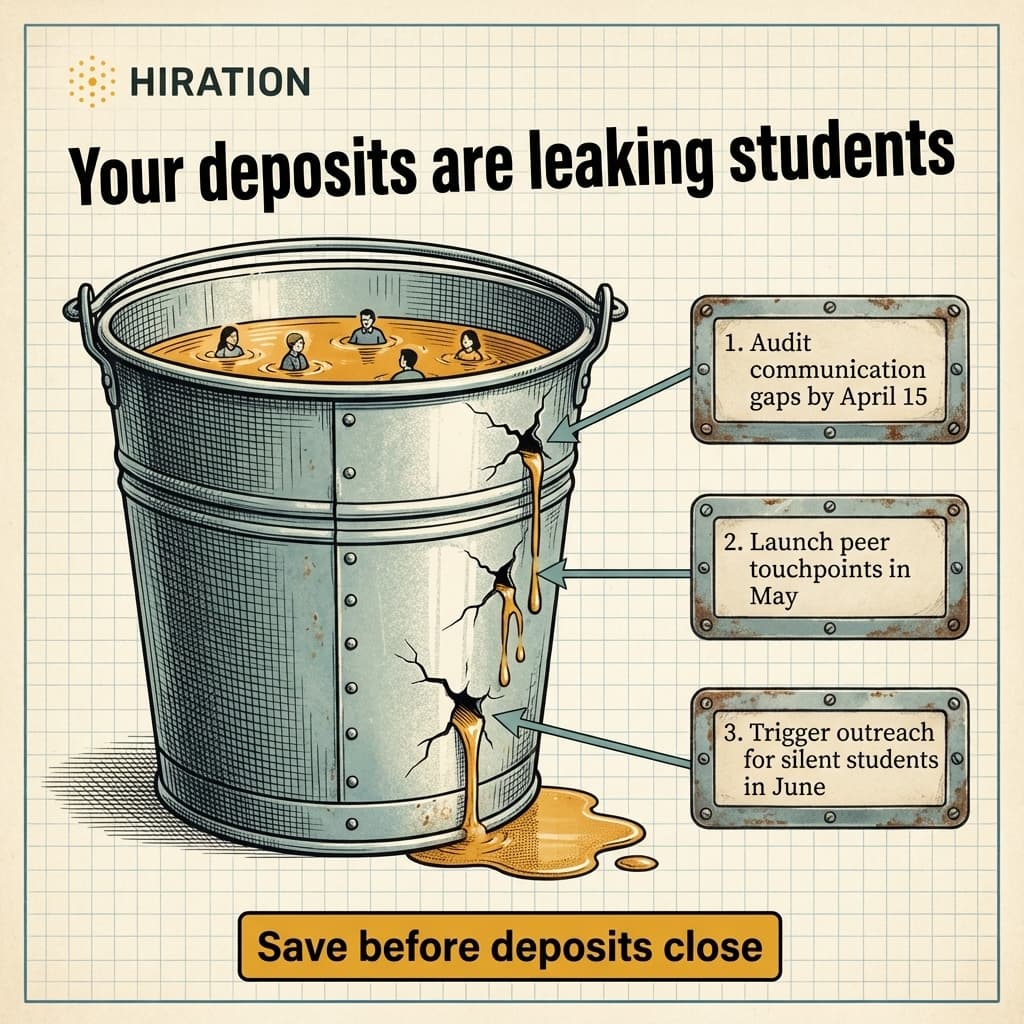
Visual by Campaign Studio · Generate your own for free
Between 10 and 40 percent of deposited students will quietly disappear before fall classes begin. The wide range isn't random. It tracks almost perfectly with how early and how intentionally an institution intervenes.
Most admissions offices treat summer melt as a June problem. By then, it's a recovery effort. The institutions with the lowest melt rates start their prevention work in April, sometimes earlier, and they follow a sequenced plan rather than sending a flurry of panicked emails in July.
Here's a month-by-month framework built from patterns we've seen across more than 100 enrollment and student success teams.
Why Summer Melt Starts in April, Not June
The deposit doesn't mean the decision is final. It means the student has made a tentative commitment while still fielding pressure from family, friends, competing offers, and their own second-guessing. April and May are when that commitment is most fragile.
Think about what a deposited first-gen student experiences in the weeks after committing. Their high school counselor asks if they're "sure." A parent worries about cost. A friend picks a different school. Meanwhile, the institution that just collected their deposit goes quiet for six weeks.
That silence is where melt begins. Not in August when you notice the empty seat. In the weeks right after the deposit, when a student's confidence wobbles and nobody is there to steady it.
If your admissions team creates recruitment content, Campaign Studio can save you a few hours each week.
See how it worksWho Melts? Segment Before You Sequence
Sending the same drip campaign to every deposited student is one of the most common mistakes in melt prevention. A student with a 1400 SAT, two campus visits, and a parent who attended your institution is not at the same risk as a Pell-eligible student 200 miles from campus who applied to seven schools.
Before you build your communication plan, segment your deposited class by risk level. Indicators that reliably predict higher melt rates include:
- Financial need. Pell-eligible students melt at significantly higher rates, especially when their aid package has unexplained gaps or requires action they don't know how to take.
- Distance from campus. Students who haven't visited are more likely to feel disconnected.
- First-generation status. Without a family roadmap for what comes after the deposit, every logistical step (housing forms, orientation registration, health records) becomes a potential off-ramp.
- Late depositors. Students who committed close to the deadline were likely deciding between options longer and remain more persuadable.
- Incomplete next steps. If a student deposited but hasn't submitted housing paperwork or registered for orientation by mid-May, that's a signal, not just an oversight.
Your highest-risk students need a different cadence, different messaging, and often a different channel than your general population. Identify them in April. Don't wait.
What Should You Actually Send Each Month?
Here's the sequenced approach, broken into three phases.
April: Close the Gaps
Your deposited students have open questions. Many won't ask them. Your job is to anticipate and answer proactively.
- Audit every deposited student for incomplete financial aid files. A missing verification document can silently kill an enrollment. Assign someone to call (not just email) students with outstanding items.
- Send a short, personal welcome from their academic department. Not admissions. The department. A 90-second video from a faculty member in their intended major saying "We're glad you're coming" is more powerful than any branded email.
- For high-risk segments, assign a peer or staff contact by name. "Your transition coach is Maria. Here's her cell number." Make the institution feel small and personal.
May: Reinforce the Decision
This is where career outcomes messaging earns its place. By May, the excitement of acceptance has faded. What remains is anxiety about whether this investment will pay off.
- Share specific career and graduate school outcomes for their intended major. Not institutional averages. "87% of our biology graduates are employed or in grad school within six months" hits differently than a generic outcomes page.
- Feature a short alumni story from someone who looks like them. Same major, same background, same type of school they came from. Representation matters here.
- Surface any remaining logistical blockers. Run a report on who hasn't registered for orientation, submitted immunization records, or completed housing applications. Each incomplete task is friction that compounds into withdrawal.
June: Coordinate the Nudges
By June, your silent students are the ones most likely to melt. They're not opening emails. They're not completing forms. They've gone dark.
This is where most institutions fail, because the outreach stays siloed in admissions. The students who need to hear from you most are ignoring your admissions emails. So use different voices.
- Coordinate a text from their assigned peer mentor or orientation leader.
- Have financial aid call directly to walk through their package. Not to send another PDF. To talk.
- Ask their academic advisor to send a personal note about fall course recommendations.
- If a student has gone completely silent by mid-June, a phone call from a current student in their major is the single highest-converting intervention we've seen. Not a robo-call. An actual human saying, "Hey, I was in your exact spot last year."
The key is that these contacts come from different people across different departments within the same week. One email from admissions is ignorable. A text from a peer mentor on Monday, a call from financial aid on Wednesday, and an email from a faculty member on Friday creates the feeling that this institution actually cares.
How Do You Track Whether It's Working?
You can't manage melt if you're only measuring it in August. Build a simple weekly dashboard starting May 1 that tracks three numbers:
- Orientation registration rate by segment (overall, high-risk, Pell, first-gen, distance)
- Outstanding action items per student (housing, health records, financial aid verification)
- Engagement signals like email opens, text responses, and portal logins
When a student's engagement drops to zero across all channels for two consecutive weeks, flag them immediately. That's your melt risk list. It updates in real time, not at the end of summer when it's too late.
Some institutions also run a brief "confidence check" survey in late May. Three questions: How confident are you that [institution] is the right choice? Is anything making you reconsider? Do you have unanswered questions about finances, housing, or academics? The students who respond with uncertainty are telling you exactly where to focus.
One Thing to Do This Week
Pull your deposited student list. Flag every student who meets two or more high-risk indicators. Then check how many of them have incomplete financial aid files or haven't registered for orientation.
That overlap, high-risk plus incomplete next steps, is your melt prevention priority list. Get it to your financial aid office and your orientation team today. Not next month. The students on that list are already wavering, and every quiet week pushes them closer to the exit.
Frequently Asked Questions
What is summer melt in college admissions?
Summer melt is when students who have deposited at a college fail to enroll by the start of fall classes. Nationally, between 10 and 40 percent of deposited students melt, with higher rates among first-generation, low-income, and Pell-eligible populations. It typically happens quietly, with students simply disengaging rather than formally withdrawing.
How do you identify students at risk of summer melt?
The strongest predictors are Pell eligibility, first-generation status, distance from campus, late deposit date, and incomplete post-deposit action items like housing or orientation registration. Students who meet two or more of these criteria should be flagged for higher-touch outreach starting in April.
When should colleges start summer melt prevention efforts?
Effective melt prevention starts in April, immediately after deposits come in, not in June or July. Institutions that wait until summer to intervene are already in recovery mode. The weeks right after a student deposits are when their commitment is most fragile and most responsive to reinforcement.
What is the most effective intervention for preventing summer melt?
Coordinated, multi-channel outreach from different campus voices during the same week consistently outperforms single-source email campaigns. A peer mentor text, a financial aid phone call, and a faculty email landing within days of each other creates a sense of institutional care that generic drip sequences can't match.
Your Admissions team is already doing this work manually
Campaign Studio turns one idea into a full campaign across Instagram, LinkedIn, email, Handshake, and LMS. Weekly engagement runs on autopilot. Event campaigns build on demand.
Run Your First Campaign