Reducing Summer Melt: 3 Risk Windows Most Admissions Teams Miss
Visual by Campaign Studio · Generate your own for free
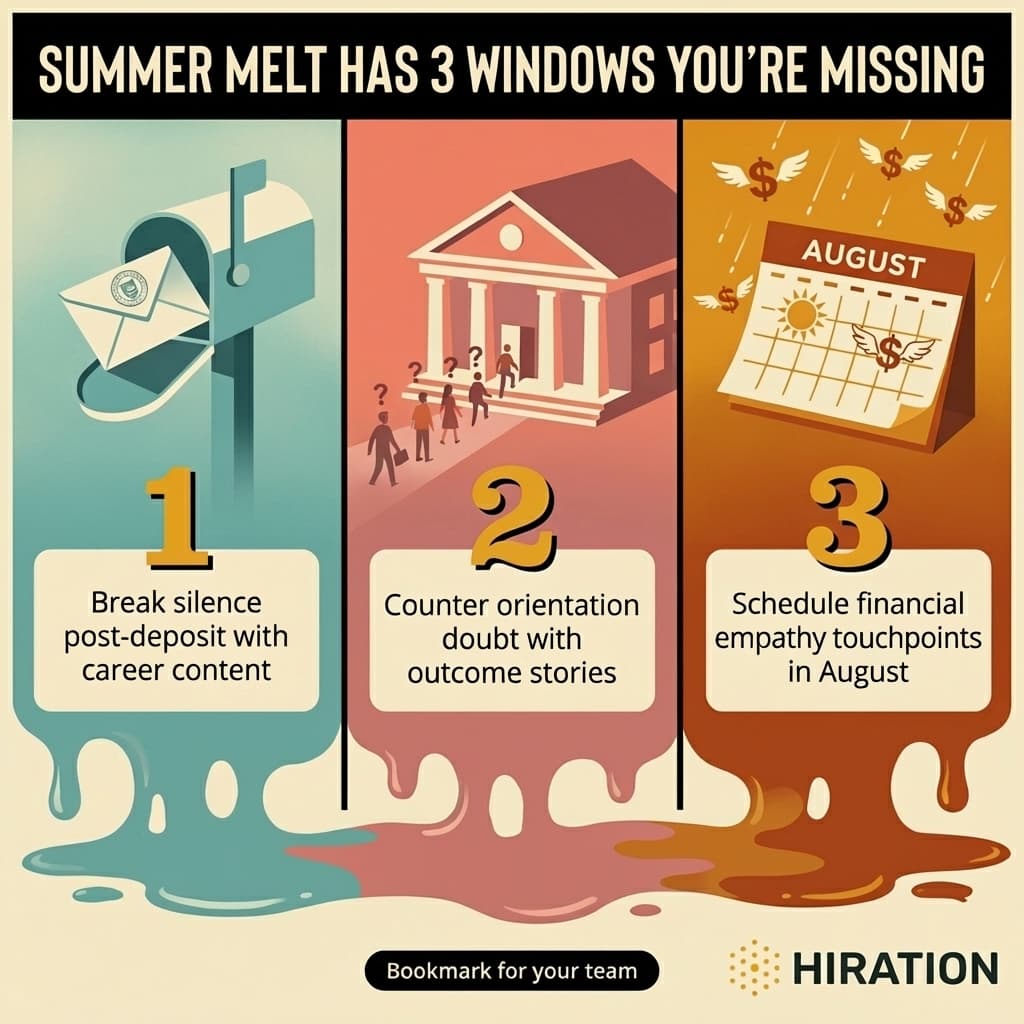
Summer melt doesn't happen all at once, and treating it like a single problem is why most intervention strategies underperform. Deposited students disengage across three distinct windows between May and August, each triggered by different anxieties, and each requiring a fundamentally different response.
Most admissions teams batch their summer outreach into one or two email campaigns. A welcome series after deposit. Maybe a reminder before orientation. Then silence until move-in day. Meanwhile, 10-20% of deposited students at many institutions quietly disappear. At open-access and mid-size regional schools, that number can climb even higher.
The problem isn't a lack of effort. It's a lack of timing.
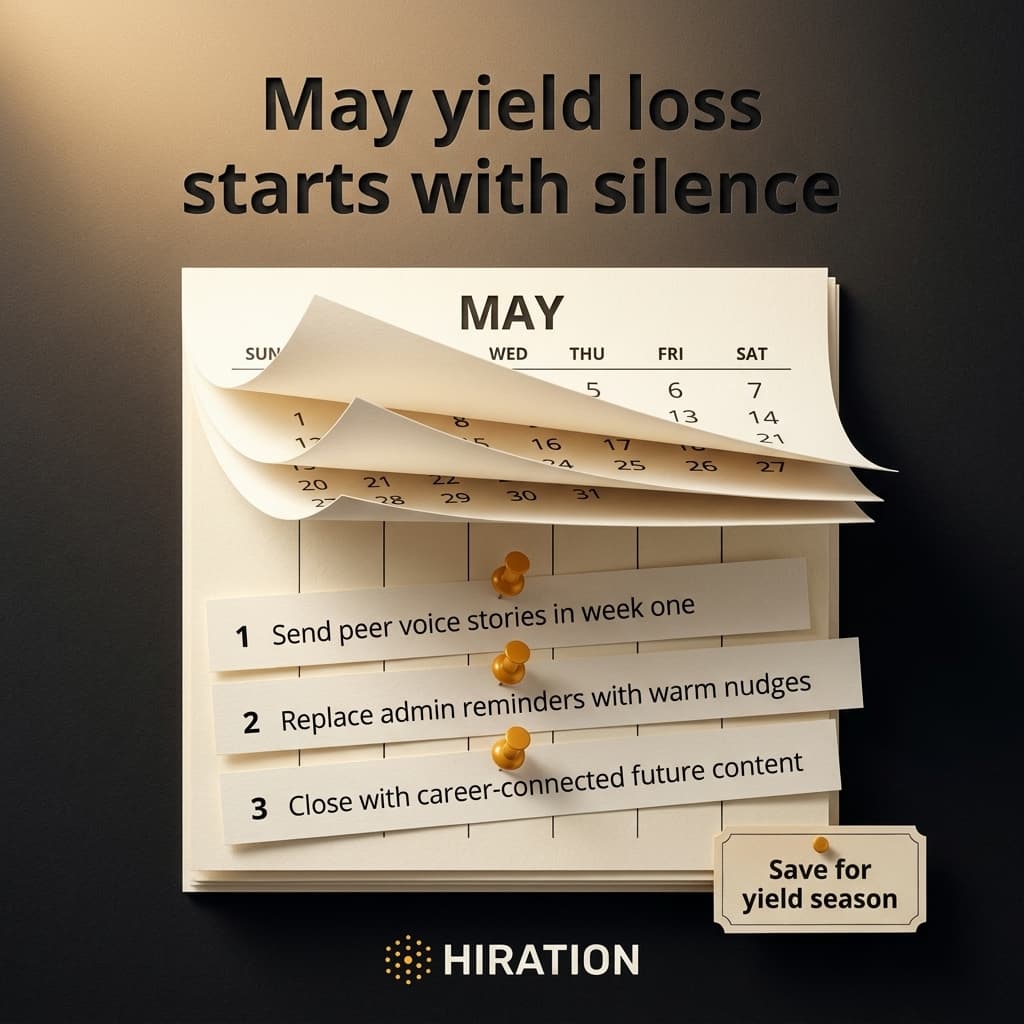
Window 1: Post-Deposit Silence (May through Early June)
The first 30 days after a student deposits are the most dangerous and the most neglected. Students just made a massive financial commitment, and the institution often responds with... a portal login and a housing form.
This is where career-connected content does real work. A student who can picture themselves in an internship, a research lab, or a first job at a company they admire has a reason to stay committed. A student staring at a tuition bill and a to-do list does not.
What works here: short, concrete touchpoints that connect the deposit to a future outcome. A 90-second video from a recent grad who landed their first role. An email from career services introducing one specific employer partnership. A text message linking to a salary outcomes page for their intended major.
You're not selling the institution again. You're reinforcing the decision they already made. That distinction matters.
If your admissions team creates recruitment content, Campaign Studio can save you a few hours each week.
See how it worksWindow 2: Orientation Doubt (Late June through Mid-July)
Orientation should build confidence. Often it does the opposite. Students show up, realize the campus is bigger than they imagined, meet roommates they're unsure about, and sit through sessions packed with policies and deadlines. For first-generation students especially, orientation can amplify the feeling that they don't belong.
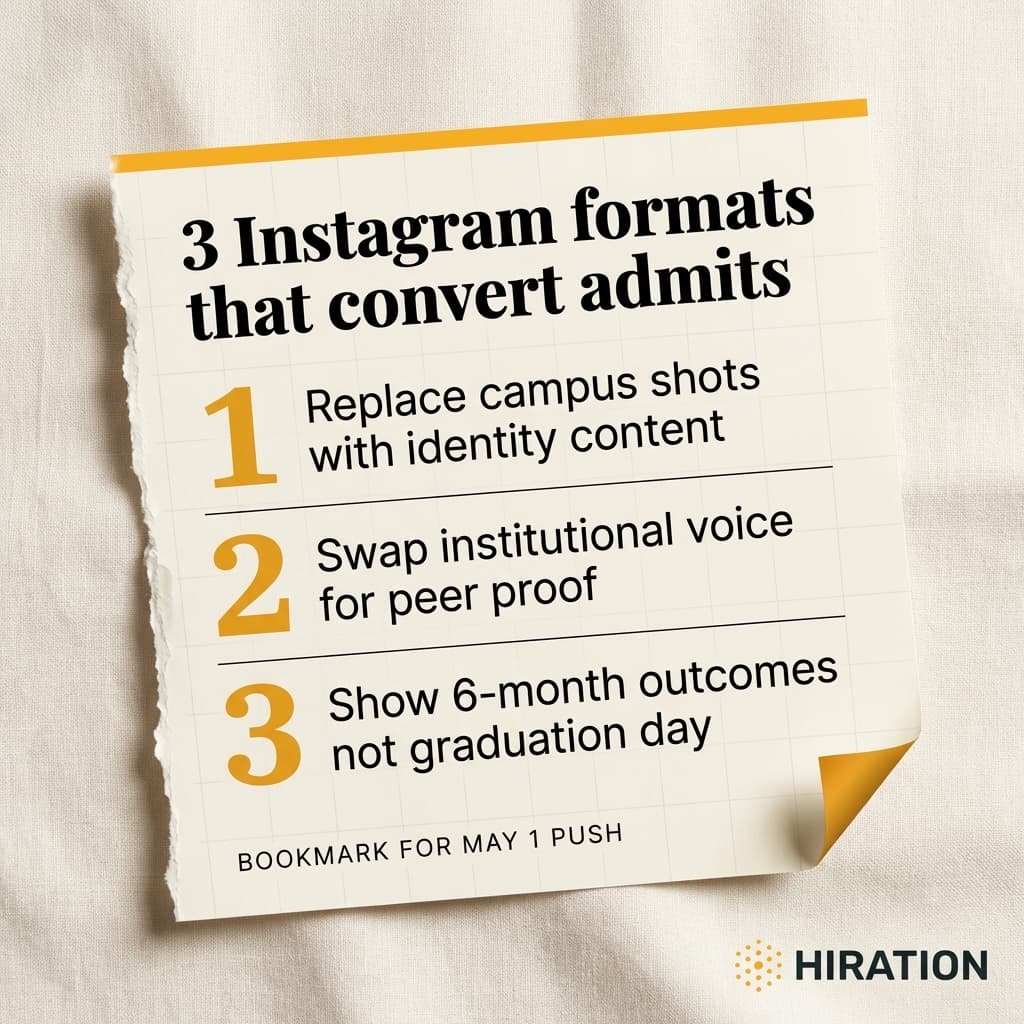
This is the window where outcome stories outperform logistical information. Picture a first-gen student who just sat through a four-hour orientation session about academic integrity policies and meal plan options. They're overwhelmed. Now imagine they get a follow-up email featuring a student who looked like them, came from a similar background, and is now working at a company they recognize.
That's not a nice-to-have. That's a retention intervention.
Admissions and career services rarely coordinate on this. They should. Career services has the alumni stories, the employer data, the proof points. Admissions has the communication channels and the segmentation data. A joint effort during this window can produce content that neither team could create alone.
Window 3: August Financial Panic (Late July through Week 1)
Financial aid packages finalize. Tuition bills arrive. Students who were excited in May start doing math in August. And for many families, the math is terrifying.
This is where empathy beats information. Don't just send a link to the financial aid FAQ. Acknowledge that the cost feels real now. Pair financial resources with ROI data specific to the student's program. Connect them with a peer mentor who navigated the same anxiety.
One tactic that under-resourced teams can implement immediately: schedule a single, segmented text message in the first week of August that says something like, "We know August can feel heavy. Here are three things that might help." Link to emergency aid resources, a payment plan page, and one career outcome stat for their major. That's it. Three links. Thirty seconds of a student's time. But it communicates that someone is paying attention.
Why does career content belong in a financial anxiety message? Because the question students are really asking isn't "Can I afford this?" It's "Will this be worth it?" Career outcomes data answers that question directly.
Build the Framework This Week
You don't need a new platform or a bigger team to structure this. Open a shared document and map your current summer communications onto these three windows. You'll likely find everything clustered in window one, almost nothing in window two, and a single financial reminder in window three.
Then fill the gaps. Pull one career outcome story from your alumni database for window two. Draft one empathetic financial touchpoint for window three. Schedule both. That's two additional touchpoints across the entire summer, and they target the exact moments when students are most likely to walk away.
Small teams can't do everything. But they can do the right thing at the right time.
Frequently Asked Questions
What is summer melt in higher education?
Summer melt refers to students who deposit at a college or university but fail to enroll by the start of fall classes. It typically affects 10-20% of deposited students, with higher rates at open-access and regional institutions. The causes range from financial anxiety to loss of connection with the institution during summer months.
How can career services help reduce summer melt?
Career services teams hold the alumni success stories, employer partnership data, and salary outcomes that directly answer the question deposited students are asking: "Will this be worth it?" Sharing career-connected content during summer outreach reinforces a student's enrollment decision by making their future feel tangible and achievable.
When are deposited students most likely to melt over the summer?
Research and practitioner experience point to three peak risk periods: the first 30 days post-deposit (May to early June), the orientation period (late June to mid-July), and the weeks when tuition bills arrive (late July through the first week of classes). Each window is driven by different student anxieties and requires different outreach strategies.
What is the most effective summer melt intervention for small admissions teams?
Targeted, well-timed touchpoints outperform large-scale campaigns. Even adding two or three strategically scheduled messages, such as a career outcome story after orientation and an empathetic financial text in early August, can meaningfully reduce melt without requiring additional staff or technology.
Your Admissions team is already doing this work manually
Campaign Studio turns one idea into a full campaign across Instagram, LinkedIn, email, Handshake, and LMS. Weekly engagement runs on autopilot. Event campaigns build on demand.
Run Your First Campaign