Student Retention Career Data: Flag At-Risk Students Before GPA Drops
Visual by Campaign Studio · Generate your own for free
Students don't just vanish. They disengage slowly, and career platforms often catch the signal months before a transcript does.
Most early alert systems in higher education rely on the usual suspects: missed classes, failing midterms, incomplete financial aid paperwork. These are lagging indicators. By the time a student's GPA triggers an alert, they've already spent weeks (sometimes an entire semester) drifting. But career engagement data tells a different story, one that starts earlier and points to something GPA can't measure: whether a student still sees a reason to be there.
Career Engagement Drops Before Academic Performance Does
Picture this: a sophomore logged into your career platform three times in September. Browsed internship listings. Clicked on a resume guide. Then nothing. Six weeks of zero activity. No logins, no event RSVPs, no content clicks.
That student hasn't failed a class yet. Their advisor hasn't heard anything concerning. But they've quietly stopped connecting their education to any future outcome. And that disconnection from purpose is one of the strongest predictors of attrition, especially for students who aren't struggling academically but simply don't see the point anymore.
Student success teams that layer career engagement data into their early alert systems catch this pattern. A student who stops engaging with career content is often losing their "why." Not their capability. Their motivation.
This matters most for the students who slip through traditional safety nets. First-generation students who came to campus with a clear goal but lost confidence after a difficult first year. Transfer students who never built the professional network that keeps peers anchored. Students with decent grades and perfect attendance who are quietly applying to other schools or considering dropping out entirely.
If your student success team shares resources online, Campaign Studio can save you a few hours each week.
See how it worksWhat Most Student Success Teams Get Wrong
The biggest mistake? Treating career services data as career services' problem. On most campuses, career platform analytics live in a silo. The career center sees engagement dashboards. Student success sees academic dashboards. Nobody's combining them.
A three-person student success team at a regional university serving 8,000 undergrads doesn't need another dashboard to monitor. They need career disengagement flags feeding directly into the system they already use. That means integration, not addition.
Here's a practical approach that works without a six-figure IT project:
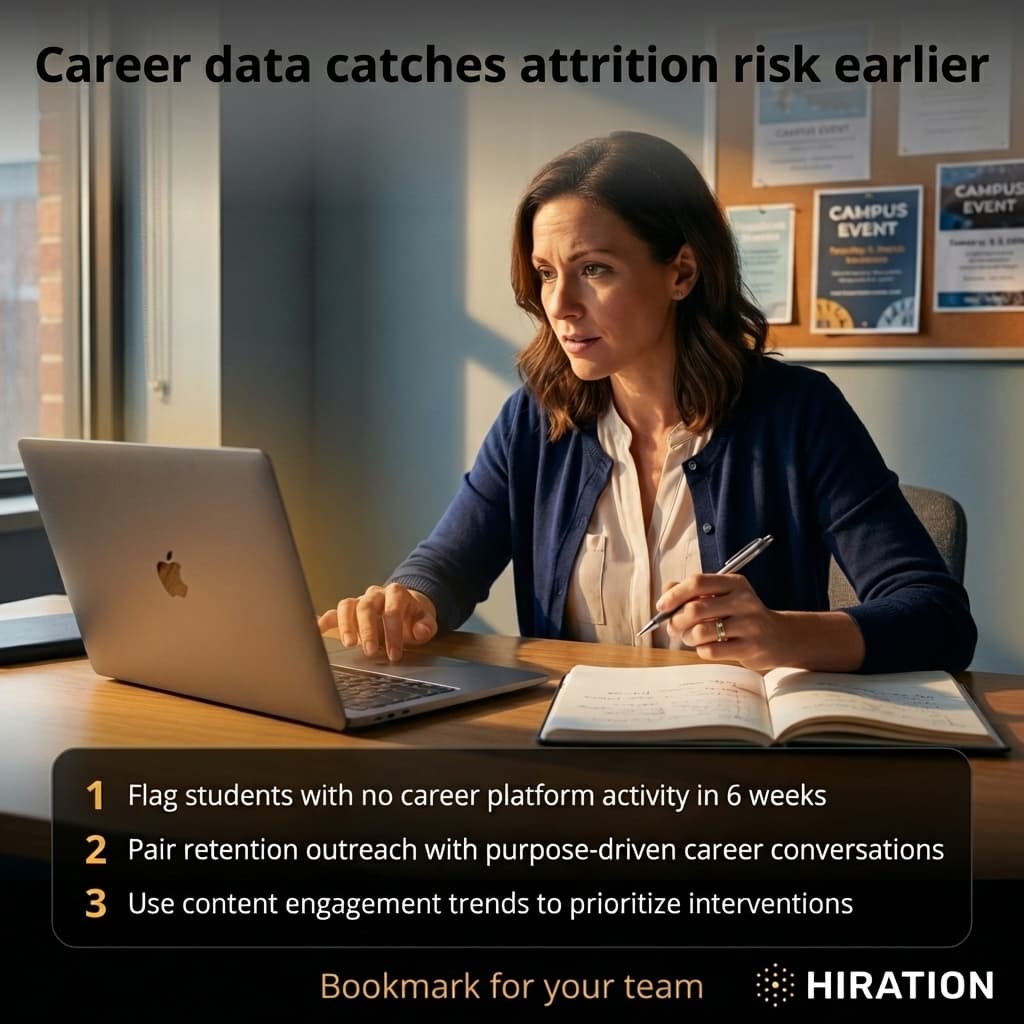
- Set a disengagement threshold. Six weeks of zero career platform activity is a reasonable starting point. No logins, no content views, no event registrations. Your career platform should be able to generate this list.
- Cross-reference with existing risk indicators. A student with no career engagement AND a recent drop in class attendance is a higher priority than someone who simply hasn't logged into Handshake lately. Combining signals is what makes this useful rather than noisy.
- Route the flag to the right person. This isn't a career counselor's outreach. It's a student success advisor reaching out with a broader conversation about goals, fit, and belonging. "Hey, I noticed you haven't been as active on campus this semester. What's going on?" works better than "Have you updated your resume?"
- Pair retention outreach with purpose-driven conversations. When an advisor does connect with a flagged student, the conversation should center on purpose, not job search logistics. What did you hope college would lead to? Has that changed? What would make this semester feel worthwhile?
That last step is where the real retention impact lives. You're not just catching at-risk students earlier. You're giving advisors a reason to have the conversation that actually matters.
Content Engagement Trends Tell You Where to Focus
Beyond individual flags, aggregate career data reveals program-level patterns. If 40% of your nursing sophomores stopped engaging with career content in October, that's not 40 individual problems. That's a cohort issue worth investigating with the department chair.
Track which student populations show the steepest engagement dropoffs and when. You'll start seeing semester-specific patterns that help you time interventions before the disengagement window even opens next year. Career data becomes predictive, not just reactive.
Student success and career services teams that share data don't just retain more students. They have smarter conversations about why students leave.
One thing you can do this week: pull a list of students with zero career platform activity in the last six weeks. Share it with your student success team. Just the list. No new software, no formal integration. See what they find when they start making calls.
Frequently Asked Questions
How can career data help identify at-risk students?
Students who stop engaging with career platforms often lose their sense of purpose on campus before their grades reflect it. Tracking metrics like platform logins, event RSVPs, and content clicks can reveal disengagement weeks or months before academic alerts trigger, giving advisors more time to intervene.
What is a good disengagement threshold for career platform activity?
Six weeks of zero career platform activity is a practical starting threshold. This includes no logins, no content views, and no event registrations. Cross-referencing this with other risk factors like attendance drops makes the signal more reliable and reduces false positives.
Should career counselors or student success advisors do retention outreach?
Student success advisors are usually the better fit because the conversation needs to center on belonging and purpose, not job search tactics. Career counselors can follow up once the student re-engages, but the initial outreach should feel like a broad check-in rather than a career planning session.
How do you integrate career data into an early alert system without a big IT project?
Start simple. Export a list of students with no career platform activity over six weeks and share it directly with your student success team. They can cross-reference it manually with their existing caseloads. This low-tech approach validates the concept before you invest in formal system integration.
Your Student Success team is already doing this work manually
Campaign Studio turns one idea into a full campaign across Instagram, LinkedIn, email, Handshake, and LMS. Weekly engagement runs on autopilot. Event campaigns build on demand.
Run Your First Campaign