

·7 min read
Alumni Marketing Plan Template for 2-3 Person Teams
Alumni marketing plan template for 2-3 person advancement teams. Two channels, five campaign types, and metrics that actually predict giving.
Read articleHow university alumni relations and advancement communications teams can drive donor engagement, Giving Day campaigns, and year-round alumni content without a full marketing department.
Most alumni marketing plans name the channels and skip the operating model. They list a quarterly newsletter, a giving day, a homecoming push, and stop there. That is a calendar, not a plan. The plan is the part that says who writes each piece, who approves it, and what happens the week somebody is out sick.
That distinction matters more in advancement than almost anywhere else, because the team is usually two or three people covering giving, engagement, events, and communications at the same time. A plan that assumes a marketing partner you do not have will quietly fail in March.
| Decision | The question it answers | What breaks when you skip it |
|---|---|---|
| Segments | Which alumni groups need genuinely different messages? | One appeal goes to everyone and recent grads tune out first |
| Cadence | How often does each segment hear from you, all year? | Contact clusters around giving season and goes silent otherwise |
| Ownership | Who drafts, who approves, and by when? | Finished drafts sit waiting on a review nobody scheduled |
| Signal | What actually tells you it worked? | Open rate becomes the goal instead of participation |
Segments come first because every other decision inherits from them. A five-years-out alum and a thirty-years-out alum are not the same audience, and the gap is not sentiment, it is life stage. One is still deciding whether the institution has any ongoing role in their working life. The other decided a long time ago.
Most shops are strongest with the alumni who already give and weakest with the ones who graduated recently enough to still be figuring out their careers. That second group is where the compounding is, and it is also where career services and advancement stop being separate departments. If you want the long version of that argument, the five-year young alumni progression lays out what each year after graduation actually calls for.
For a small shop, one page. Segments down the left, months across the top, an owner in every cell you intend to fill, and blank space where you have decided not to compete. The blank space is the important part. A plan that fills every cell is a plan written for a team that does not exist.
If you are building that page now, these go deeper on the pieces:
The articles below go further on each of these.
Alumni marketing plan template for 2-3 person advancement teams. Two channels, five campaign types, and metrics that actually predict giving.
Read article
Stop sending donation asks to recent graduates. A 5-year engagement progression from career value to community to giving builds young alumni loyalty that lasts.
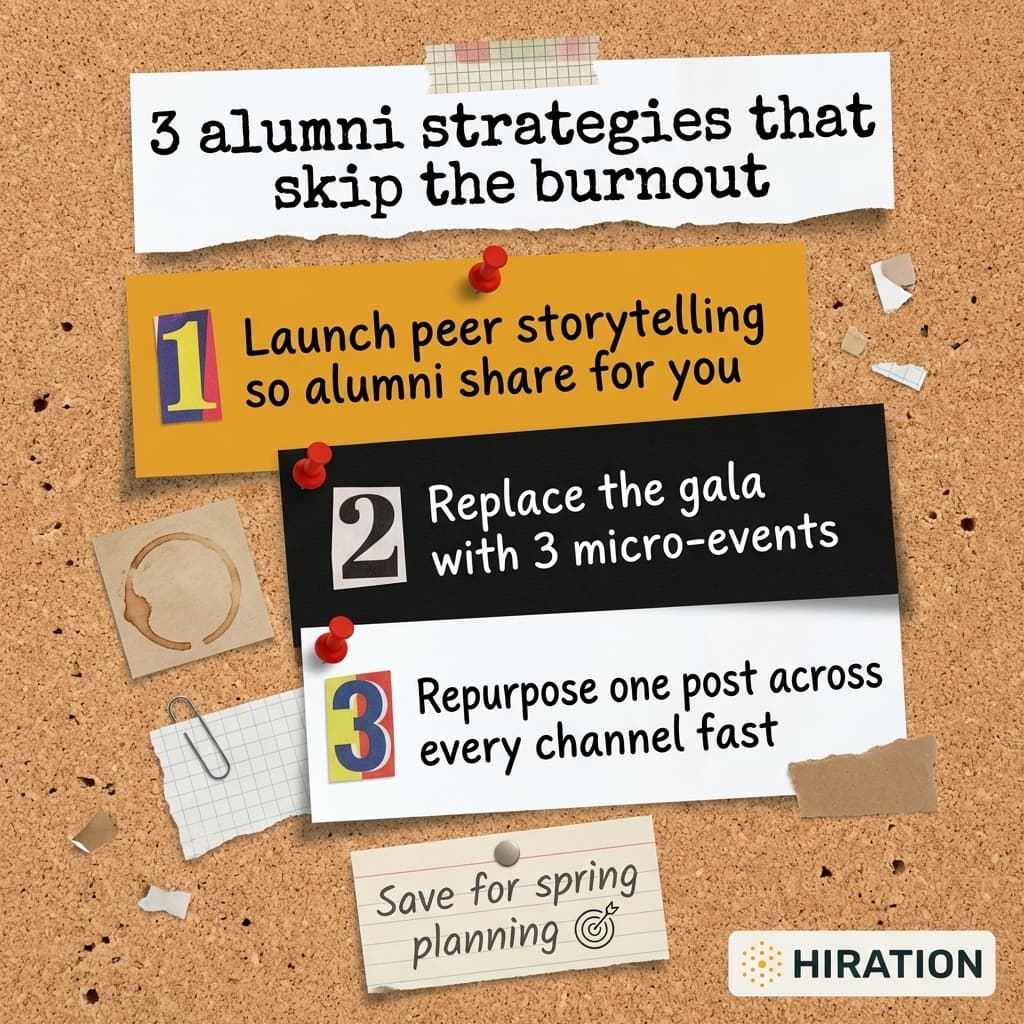
Small advancement teams of 1-3 people can run high-impact alumni campaigns using peer-to-peer strategies, micro-events, and repeatable systems. Here's how.
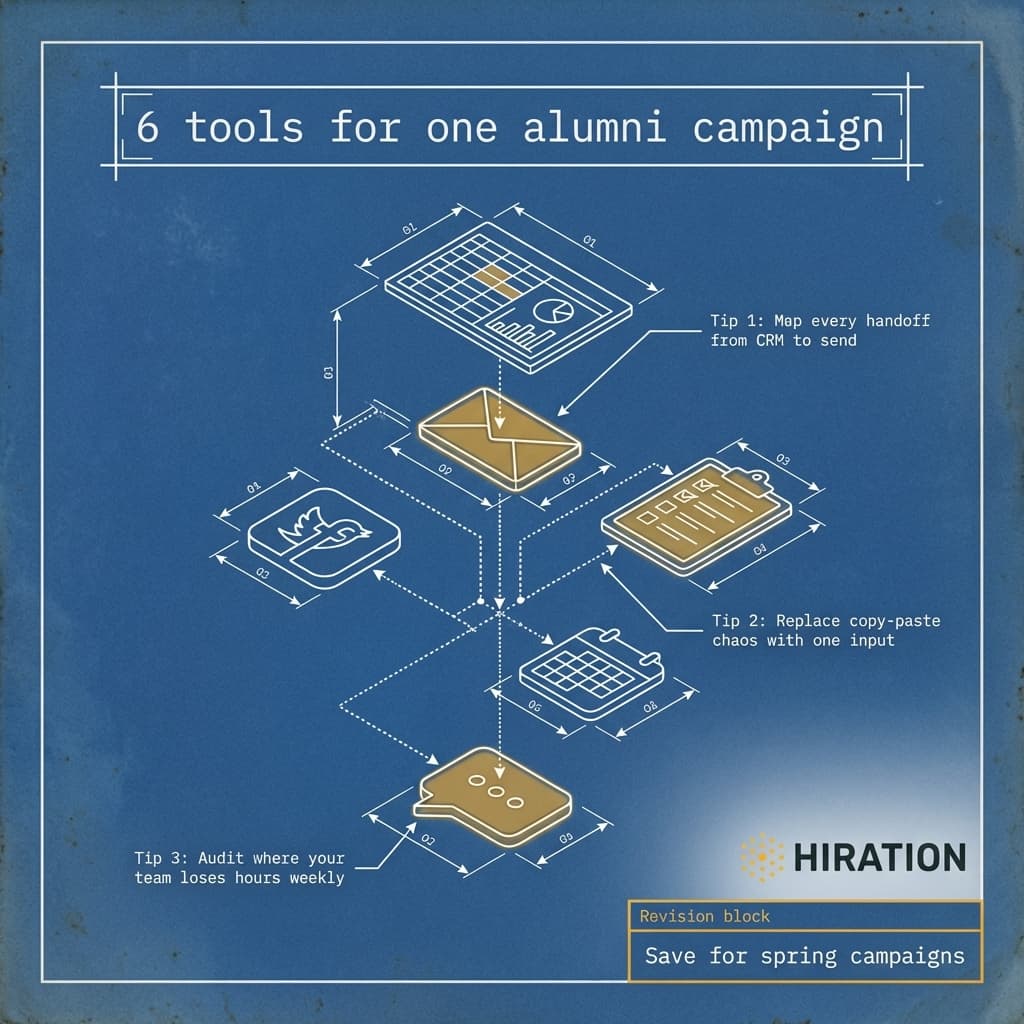
Alumni campaign workflows break down between CRM and send. Map your handoffs, eliminate manual channel adaptation, and collapse the content middle layer.
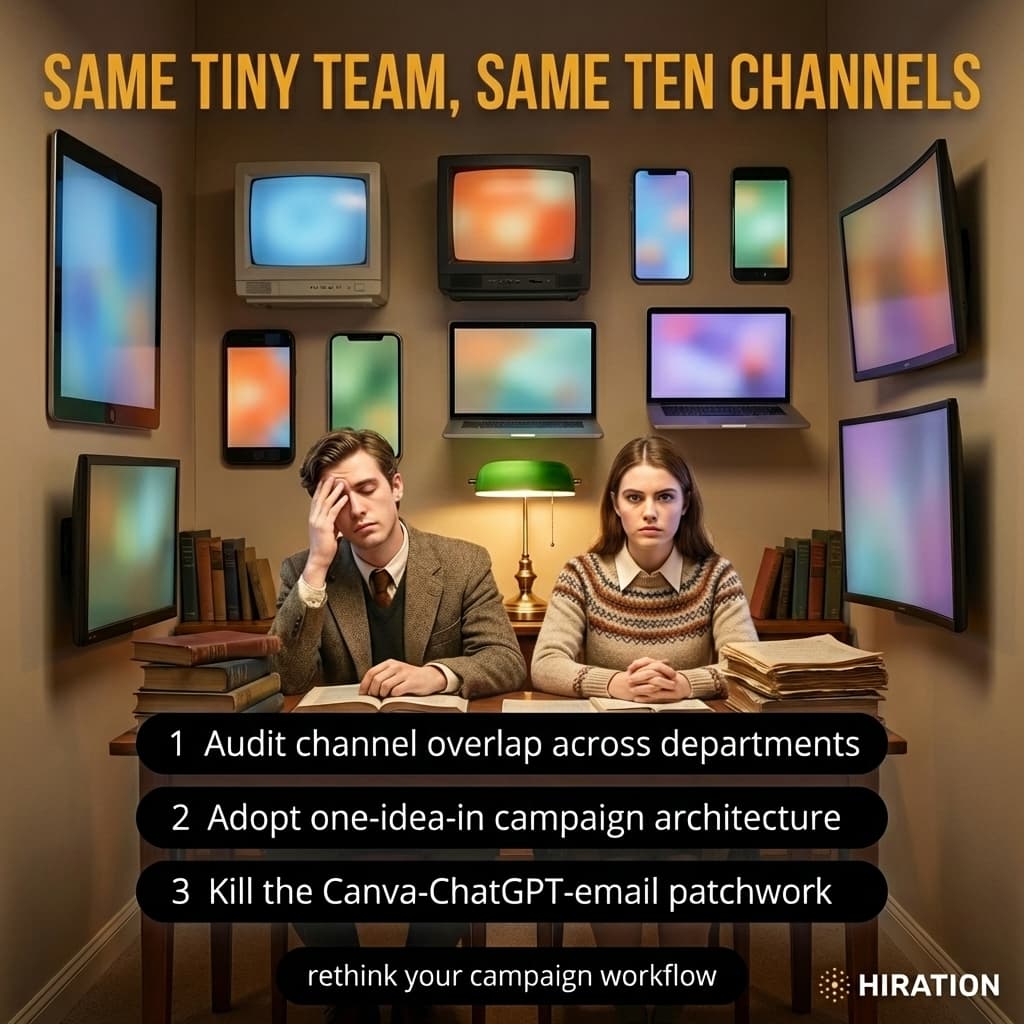
Alumni relations teams without marketing staff can run multi-channel campaigns faster by adopting one-idea-in architecture instead of stitching together free tools.