
Event Reminder Emails: How Outcome Framing Boosts Student Turnout
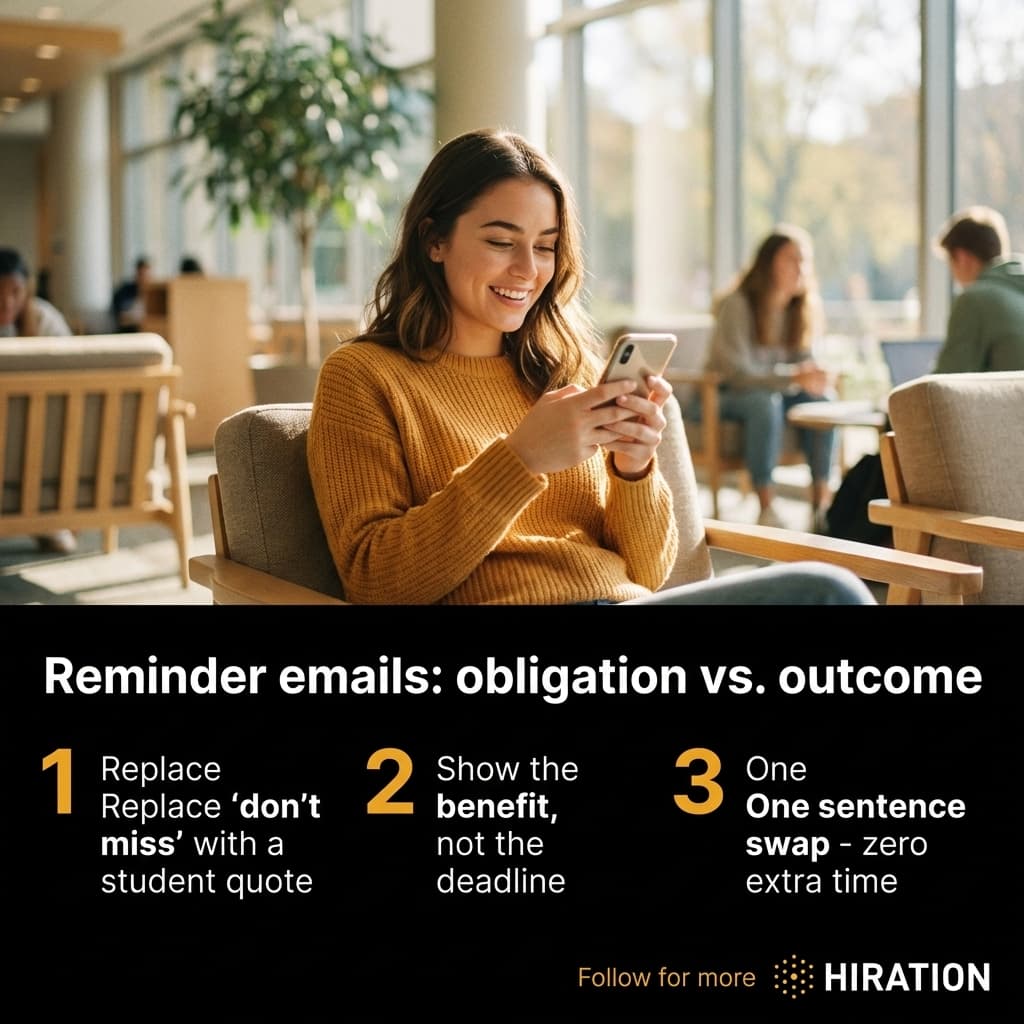
"Don't miss our resume workshop Thursday!" You've sent that email. Probably this week. And it's not working nearly as well as one sentence about what actually happened to the last student who showed up.
Career centers send a staggering number of event reminders. A mid-size university running 8-10 programs a month might push out 30+ reminder emails between February and April alone. Most follow the same template: event name, date, time, location, "don't miss it." The problem isn't frequency. It's framing. And a small rewrite can change whether students delete or click.
Obligation Framing Triggers the Wrong Response
Phrases like "don't miss," "last chance," and "seats are filling up" rely on what psychologists call loss aversion. They're trying to make students feel like they'll regret not attending. But here's what that actually sounds like to a sophomore scrolling through 40 unread emails: pressure from an office they've never visited, about an event they're not sure applies to them.
Guilt doesn't drive attendance. Curiosity does.
When you frame a reminder around obligation, you're asking students to trust that the event will be worth their time. That's a big ask for someone who's never been. You're essentially saying "this matters" without showing why. And students, reasonably, skip it.
Compare these two subject lines:
- "Don't Miss: Resume Workshop This Thursday"
- "She thought her retail job didn't count. Then Deloitte called."
The first is informational. Fine. Forgettable. The second creates a gap the reader wants to close. Who is this person? What happened? Could that be me? That gap is what gets the email opened.
Real Student Outcomes Are Your Best Copy
Outcome framing replaces "you should attend" with "here's what someone like you walked away with." It works because it gives students a concrete picture of the result, not an abstract promise of value.
You don't need a dramatic success story every time. Small, specific wins work just as well:
- "Marcus came in with no idea how to talk about his dining hall job. He left with three bullet points he's now using on every application."
- "Two students who attended last month's networking night got informational interviews within a week."
- "Last semester, a first-gen junior told us this workshop was the first time she felt like she belonged in a career conversation."
Notice what these have in common. They're specific. They name a before and after. And they feature students, not your office.
You probably already have dozens of these stories sitting in your post-event surveys, advisor notes, and appointment follow-ups. The shift isn't about creating new content. It's about pulling one sentence from what you already know and dropping it into the first line of your reminder.
How to Build This Into Your Workflow Without Adding Work
If you're a three-person team sending reminders for a dozen events each month, "rewrite all your emails" sounds like a cruel joke. So don't rewrite them. Just add one line.
Keep your existing template. Same event details, same registration link, same formatting. But before the standard copy, insert a single sentence about a real outcome from the last time you ran this event (or a similar one). That's it. One sentence of proof before the logistics.
A practical system to make this sustainable:
- After each event, write down one specific student win in a shared doc. Just one line. Takes 30 seconds.
- Before sending the next reminder for that event type, pull from the doc.
- Use it as your email's opening line or subject line.
Over a semester, you'll build a library of outcome sentences organized by event type. Resume workshops, mock interviews, career fairs, employer panels. Each one gets its own small collection of real results you can rotate through.
Want to go further? Ask students directly. A quick post-event text, "What's one thing you're taking away from today?", gives you their language, not yours. Students trust peer voices more than institutional ones.
Try This Before Your Next Send
Pull up the next event reminder sitting in your drafts. Before the date and time, add one sentence about a real student who benefited from a past version of that event. Use their words if you have them. Be specific about what changed for them.
That's 45 seconds of editing. And it turns a forgettable reminder into something a student might actually picture themselves in.
Create campaigns like this in minutes
Career Engage Studio helps career centers create student engagement content with AI.
Learn More