
Post-Spring-Break Student Re-Engagement: A 7-Day Outreach Sequence
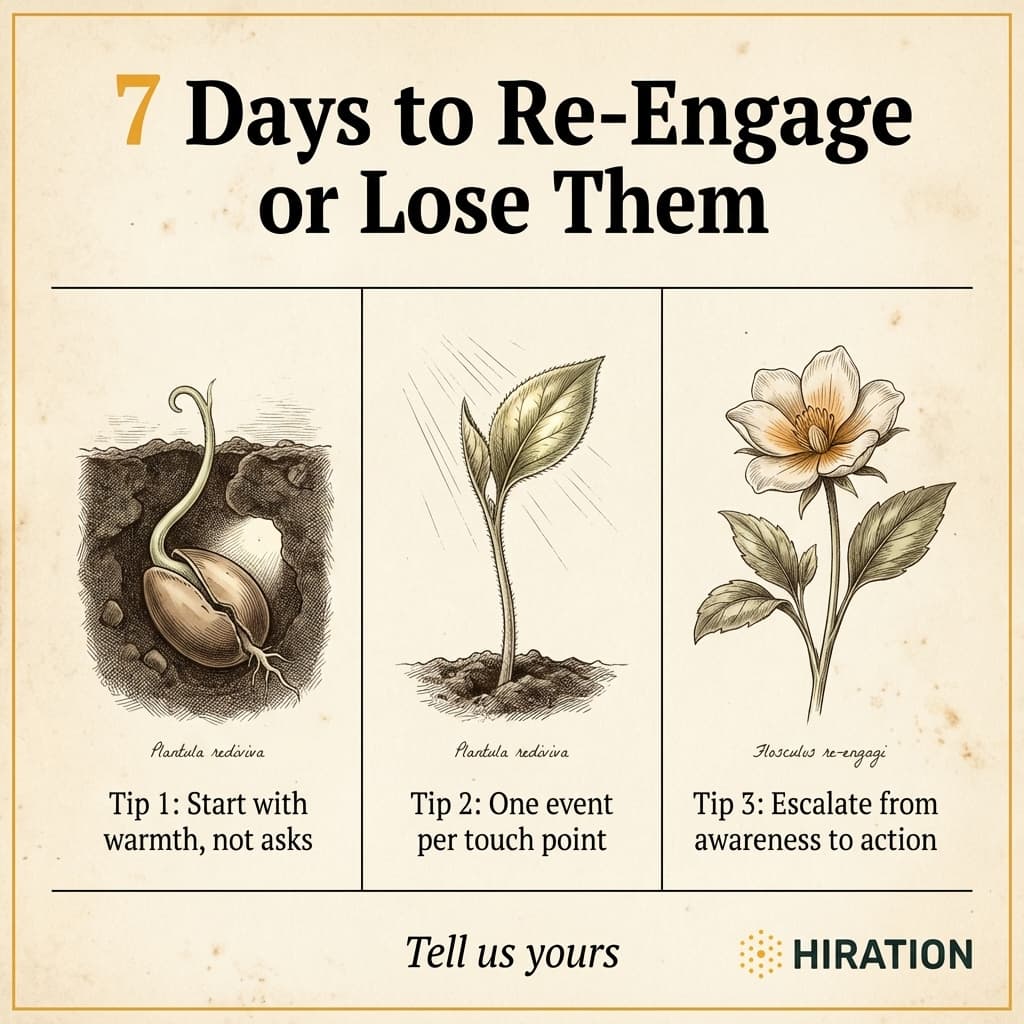
Students who disengage the first week back from spring break rarely come back before May. That's not a hunch. It's a pattern career centers see every single year, and the window to reverse it is about seven days.
Most teams respond to the post-break slump by blasting out event flyers and appointment reminders. That instinct makes sense. You've got a career fair in three weeks, employer deadlines closing, and seniors who haven't updated a resume since October. But jumping straight to the ask is exactly why re-engagement campaigns fail. Students scroll past. They don't click. And by mid-April, your appointment slots are empty.
A structured outreach sequence fixes this. Not by doing more, but by doing things in the right order.
Warm First, Ask Later
The biggest mistake career centers make post-break is treating every message like a call to action. Students come back from a week off mentally checked out. Their inbox is full of course reminders, housing deadlines, and club announcements. Your email about "Spring Career Fair Registration" lands in that pile and disappears.
Flip the script. Your first touch should feel like a welcome back, not a sales pitch. Days one and two of the sequence are about warmth and reconnection. One email. Subject line references spring break ending, not career prep. Something like "Hope break treated you well" or "Back on campus? Us too." The body is short. Acknowledge the transition. Maybe mention one thing happening at the center this month. No links to schedule appointments. No lists of upcoming deadlines.
This feels counterintuitive when you're staring at low engagement numbers. But awareness has to precede action. You're reminding students your office exists and that you're human beings who get that coming back is hard.
One Event, One Reason, One Post
Days three and four shift from awareness to interest. This is where a single social media post does more work than a newsletter crammed with twelve events.
Pick your strongest upcoming program. Just one. Post the date, the time, and one concrete reason to attend. "Mock interviews with Deloitte recruiters, Thursday at 2pm, spots going fast" beats a Canva flyer listing every event through May. Students don't make decisions when they're overwhelmed with options. They make decisions when one thing feels relevant and urgent.
The temptation to promote everything at once is real, especially on a four-person team trying to fill seats across multiple programs. Resist it. A focused post with one clear value proposition will outperform a comprehensive calendar every time.
Turn Opens Into Action on Days 5-7
Here's where the sequence pays off. By day five, you have data. Who opened that welcome-back email? Who engaged with the social post but didn't register for anything?
Those students told you something with their behavior. They're interested but haven't committed. Days five through seven are for direct, low-friction outreach to exactly that group. A short follow-up email with a single appointment link or event RSVP. One ask. One click. No "check out all our spring programming" energy.
If your email platform tracks opens (most do), segment that list. Even a basic tool like Mailchimp gives you this. For social engagement, check who liked or commented and cross-reference with your student database. Yes, this takes 30 minutes. It's worth it.
The psychology here is simple. You moved from "we see you" to "here's something specific" to "take this one step." Three phases, three touches, one week. Awareness, interest, action.
Why Seven Days and Not Three Weeks
Picture this: it's the Monday after break. A senior opens your warm welcome-back email, thinks "oh right, career center," then closes it. By Wednesday, they see your focused event post and think "that actually sounds useful." By Friday, they get a follow-up with a direct booking link and finally click through.
That progression doesn't work if you compress it into one day or stretch it across a month. One day feels pushy. A month loses momentum. Seven days matches the natural rhythm of students resettling into campus life.
And here's what makes this sustainable for small teams. The entire sequence is three pieces of content. One email, one social post, one targeted follow-up. That's manageable even when you're also running programs, meeting with employers, and covering front desk shifts.
Map out your sequence this week. Write the welcome-back email before break starts, draft the social post around your strongest post-break event, and set a calendar reminder for day five to pull your open-rate data. Three pieces of content, prepped in under two hours, with the potential to recover students you'd otherwise lose until fall.
Create campaigns like this in minutes
Career Engage Studio helps career centers create student engagement content with AI.
Learn More